Colloquially, many know GTIN as a barcode, but technically, GTIN is the number found beneath the barcode symbol itself, and can therefore also be used for other technologies such as 2D barcodes and RFID tags.
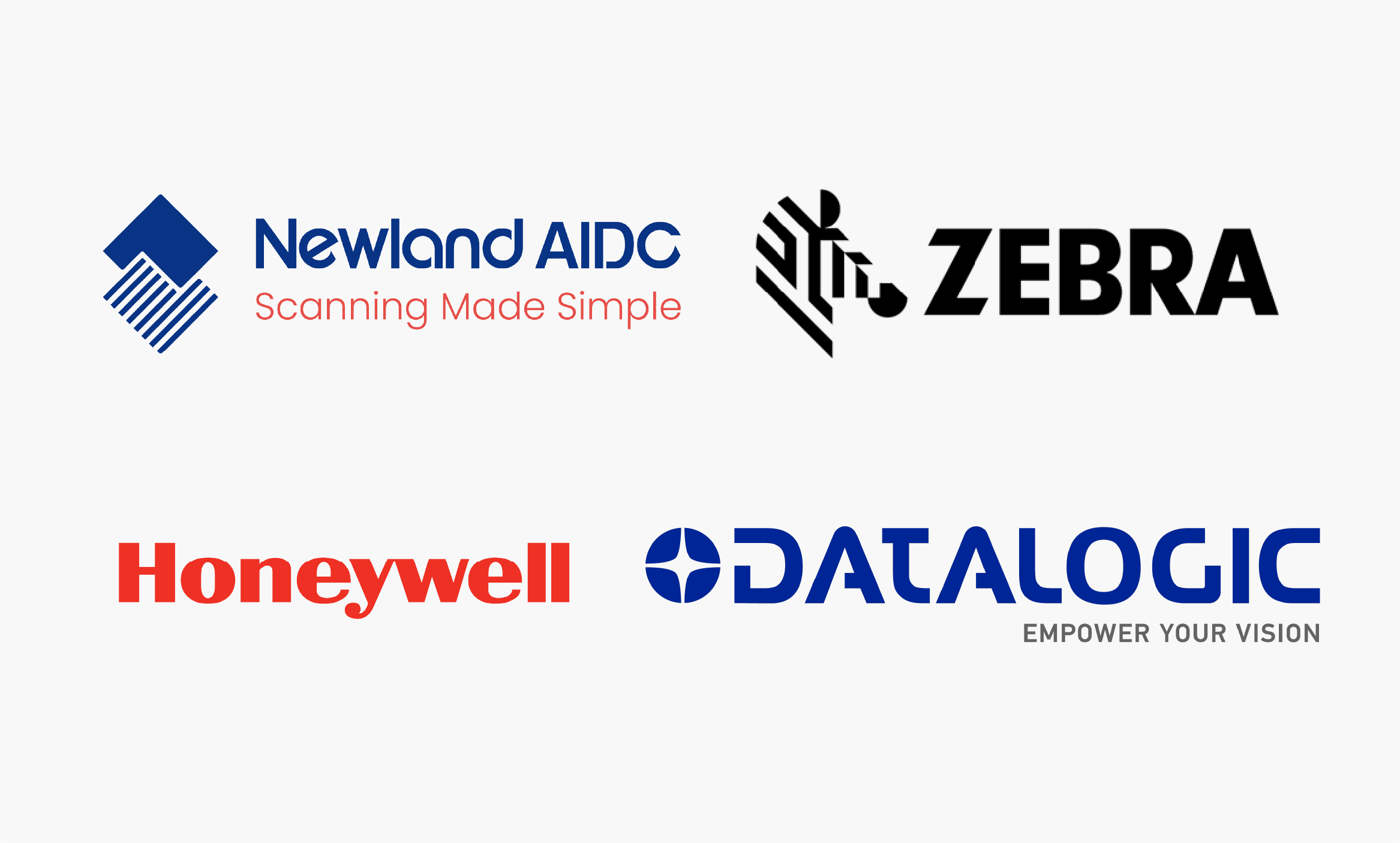
Four of the world's leading suppliers of scanning solutions have now announced that they are ready to support this global transition together with the industry and GS1.
Datalogic, Honeywell, Newland AIDC and Zebra Technologies have joined the joint statement on the transition to QR codes powered by GS1, which was initiated by a group of the world's largest companies.
In practice, this means that a large portion of the scanning technology used in retail - from checkout to warehouse - will increasingly be designed to handle both traditional 1D barcodes and 2D codes, such as QR codes powered by GS1 and GS1 DataMatrix.
For decades, traditional EAN/UPC barcodes have been the backbone of retail point-of-sale systems. However, current and future requirements for increased traceability, food safety, documentation, and consumer information demand the ability to scan and share more data directly from a product's barcode.
2D barcodes can, for example, carry information about:
This makes it possible to create smarter processes in retail – in terms of operations, compliance, and customer experience.
"Datalogic leads the way in GS1 adoption with the industry's broadest portfolio of 2D-ready retail devices. By embracing GS1 Digital Link, we help retailers and brands access more and better product information, strengthen traceability, and increase consumer engagement—with future-proof, interoperable solutions."
Rosario Casillo,
Executive Vice President, Data Capture Product and Solutions, Datalogic
"Honeywell is committed to advancing barcode technology and strengthening traceability and efficiency in the retail supply chain. We are pleased to collaborate with GS1 to validate 2D scanning performance and integrate the technology seamlessly across our portfolio."
David Barker
President, Honeywell Productivity Solutions and Services
"Newland AIDC is committed to full 2D barcode compatibility across our retail scanning solutions. Implementing 2D barcodes offers a wide range of benefits, including improved traceability, better food safety, increased supply chain efficiency and transparency, enhanced regulatory compliance, and more effective consumer communication. We are participating in pilot programs and technical validation to ensure our hardware meets GS1 readiness standards. Our teams are ready to support retailers and our partners with implementation guidance and best practices."
Dong Guo
Chief Executive Officer, Newland AIDC
"Zebra Technologies is committed to full 2D barcode compatibility across our retail scanning solutions. These 2D barcodes can strengthen traceability, food safety, consumer protection, supply chain efficiency, regulatory compliance, and consumer communication. We are participating in pilot programs and technical validation to ensure our solutions meet customer needs as the transition to GS1 2D barcodes at retail point-of-sale accelerates. Our teams are ready to support retailers with implementation guidance and best practices."
Thomas Bianculli
Chief Technology Officer, Zebra Technologies
The global retail sector is working toward the goal that, by the end of 2027, point-of-sale (POS) systems must be able to scan both 1D and 2D barcodes on products—without creating bottlenecks at checkout.
"The fact that these four major solution providers are now on board sends a strong signal to the retail industry that the infrastructure is moving in the same direction,"
says Per Ahlmann Andersen, CEO of GS1 Denmark.
If you are in the retail sector, now is a great time to start planning:
Interested in learning more about the support for the next generation of barcodes? Read more in the news article here
GS1 Denmark helps retailers understand the opportunities and plan the transition to the next generation of barcodes – including what it means for checkout, processes, and data. Contact us here

GS1Trade Image provides professional marketing and planogram images that meet retailers' requirements and imaging guidelines.
If you want to create your own product photos, we can also help you get certified.

GS1Trade Sync is a data pool for product data exchange that your trading partners can access.
GS1Trade Sync streamlines data exchange between trading partners because data only needs to be entered in one place. This increases the quality of product data and creates value for you - and the entire value chain.

GS1Trade Packaging is a packaging data system that gathers your packaging data in one place. The system ensures efficient collection, structuring, and declaration of packaging data, and makes it easy to exchange packaging data with other companies.

GS1Trade Exact ensures the quality of your product data. All physical products are checked against the data registered in GS1Trade Sync.
With this service, you get verified and quality-assured data that benefits the entire supply chain.

GS1Trade Transact handles the digital receipt of orders and the sending of documents to your customers. You can choose whether to integrate it with your financial system or access it online.

GTIN (also known as EAN) stands for “Global Trade Item Number” and is the number sequence shown beneath a barcode symbol.
GTIN (EAN) is a global standard used to uniquely identify digital and physical products, allowing the barcode to be scanned anywhere in the world throughout the supply chain.

A GLN (also known as EAN) allows you to uniquely identify physical, functional, legal, or digital entities. This can include the sender, receiver, buyer, seller, supplier, manufacturer, delivery location, billing location, store, or internal departments.