GTIN
Colloquially, many know GTIN as a barcode, but technically, GTIN is the number found beneath the barcode symbol itself, and can therefore also be used for other technologies such as 2D barcodes and RFID tags.
Colloquially, many know GTIN as a barcode, but technically, GTIN is the number found beneath the barcode symbol itself, and can therefore also be used for other technologies such as 2D barcodes and RFID tags.
The public sector can achieve a better and more cost-effective procurement process by digitalising its purchasing activities. By implementing the same databases and methods used in the private sector, improvements can be realised before, during, and after procurement.
Gain insight into how GS1 standards can contribute to efficient tendering and procurement processes in public purchasing.
GS1 barcodes and the product database, GS1Trade Sync, can help streamline procurement processes for public buyers.
GS1Trade Sync contains products that suppliers currently have available, and the requested data is accessible in real time. This means all relevant product information can be retrieved whenever needed throughout the tender process.
By using GTIN barcodes and GS1Trade Sync, public buyers gain access to fully up-to-date product information. This eliminates the need for extensive market research for each tender -resulting in less administration and more accurate purchasing decisions.
Private suppliers also benefit from GS1 standards. They only need to update their product information in one place, saving time and resources while improving data quality. This is why more than 1,200 companies and organisations use GS1Trade Sync to share their product data and images.
Manual goods receipt and inventory management do not always provide an accurate overview of stock levels. Barcodes can minimise waste in the procurement process by ensuring visibility of products and helping to reduce inventory levels.

By implementing barcodes, we can ensure correct delivery and enable digital inventory management via a Warehouse Management System (WMS). A WMS provides real-time information on product locations, stock levels, and automatic reordering. The result is less waste and more efficient procurement.

Barcodes contain information about when products expire. This information can be used intelligently to ensure that products are used before they expire. For medicines, there are clear benefits in terms of cost efficiency, patient safety, and sustainability when they are used within their expiry date.
GS1’s solutions improve post-procurement reporting, whether it relates to nutrition, claims such as environmental labels, guidance for clinical staff, or instructions on waste sorting.
All of this information can be accessed either through the GS1Trade Sync product database or via the barcode.

GS1’s solutions enable the documentation of sustainability gains. We can measure and reduce CO2 emissions in connection with public procurement.

The GS1Trade Sync product database and barcodes make it possible to retrieve the exact nutritional information used by a public kitchen.

It is possible to find information about environmental labels and claims in the product database, making it possible to generate automatic reporting on this.

UNSPSC is an international classification standard formally owned by UNDP and administered by GS1 US. The Danish edition of UNSPSC is managed by GS1 Denmark.
When dealing with the public sector, UNSPSC is recognised as the most efficient, flexible and comprehensive classification system for this purpose. In addition, a number of public institutions require products to be declared with UNSPSC codes.
See how GS1 standards strengthen digitalisation, patient safety, and sustainability in the public sector. The catalogue presents 14 concrete examples from the healthcare sector and other areas, showing how unique identification and shared data create better procurement processes, less waste, and more efficient workflows.
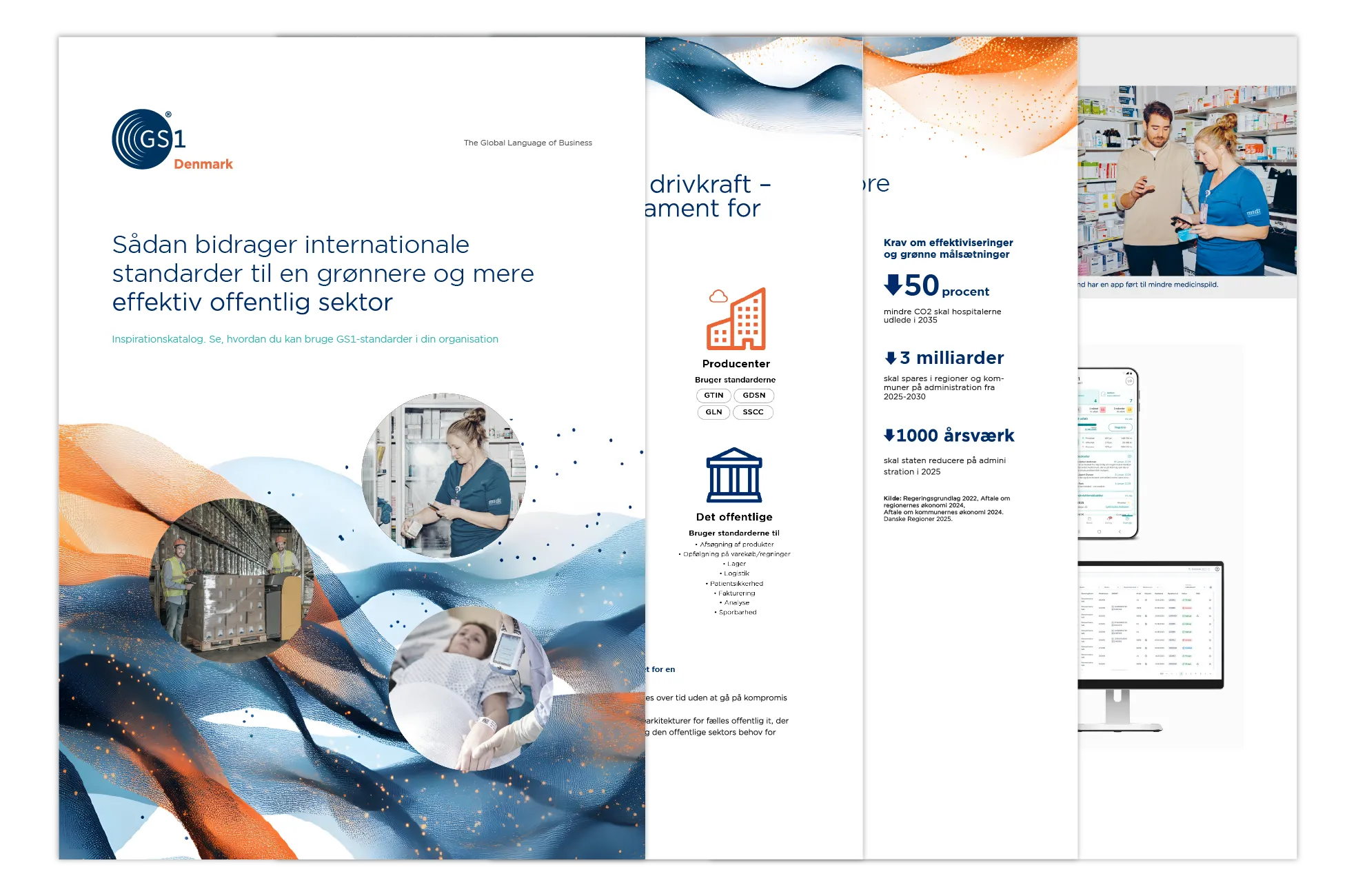
We have collected a number of relevant cases that are relevant for you who work with public procurement.
Would you like to learn more about how you can use GS1 standards and services to support you and your organisation? Then get in touch with us.