Colloquially, many know GTIN as a barcode, but technically, GTIN is the number found beneath the barcode symbol itself, and can therefore also be used for other technologies such as 2D barcodes and RFID tags.
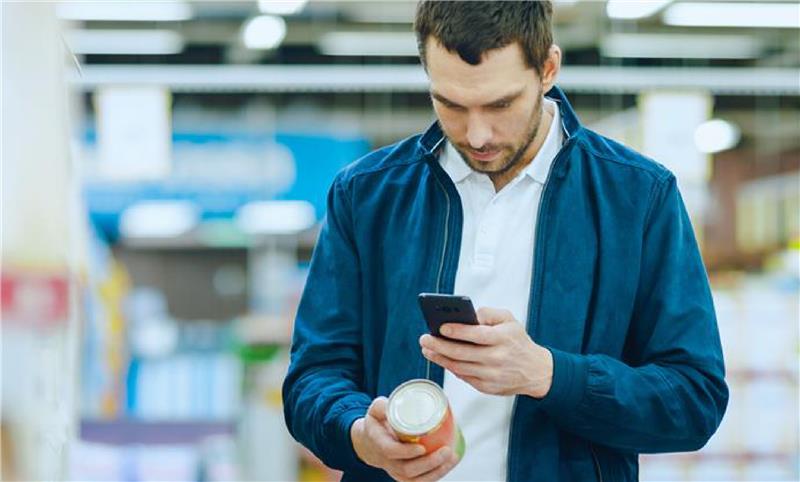
Consumers are increasingly demanding more and better information about the products they buy. An analysis from GS1 US shows that access to detailed product data increasingly plays a crucial role in determining which products end up in the shopping cart.
Among other things, the study shows that 79% of consumers are more likely to buy a product if they can scan a barcode or QR code and access additional product information via their smartphone. At the same time, 62% of consumers state that they are willing to pay more for a product if they have access to detailed product information.
Today, consumers expect far more transparency than before. Information about ingredients, origin, sustainability, allergens, and usage is often crucial in determining whether a product is chosen or rejected. When product data is easily accessible and trustworthy, it gives consumers a better opportunity to compare products and make informed choices.
At the same time, several studies show that trust in product information is crucial. If consumers do not trust the information they find online, it can directly impact sales.
The increasing digitalization of commerce – both online and in physical stores – means that the quality of product data is more important than ever before. Accurate and complete data makes it easier for consumers to find, understand, and compare products across channels.
Technologies such as 2D barcodes, e.g., QR codes and DataMatrix from GS1, enable companies to share far more information than can fit on a traditional product label. This allows consumers to access updated product data directly from the manufacturer.
For businesses, this means that structured and standardized product data becomes an important competitive parameter. When product information can be shared efficiently between manufacturers, retailers, and digital platforms, it becomes easier to ensure that consumers encounter the same, correct information – no matter where they shop.
Several of GS1's standards make it possible to identify, share, and update product data across the value chain. For example, via the product database GS1Trade Sync. This not only creates more efficient processes in the supply chain but also better and more transparent customer experiences.
Read more about the study from GS1 US

GS1Trade Image provides professional marketing and planogram images that meet retailers' requirements and imaging guidelines.
If you want to create your own product photos, we can also help you get certified.

GS1Trade Sync is a data pool for product data exchange that your trading partners can access.
GS1Trade Sync streamlines data exchange between trading partners because data only needs to be entered in one place. This increases the quality of product data and creates value for you - and the entire value chain.

GS1Trade Packaging is a packaging data system that gathers your packaging data in one place. The system ensures efficient collection, structuring, and declaration of packaging data, and makes it easy to exchange packaging data with other companies.

GS1Trade Exact ensures the quality of your product data. All physical products are checked against the data registered in GS1Trade Sync.
With this service, you get verified and quality-assured data that benefits the entire supply chain.

GS1Trade Transact handles the digital receipt of orders and the sending of documents to your customers. You can choose whether to integrate it with your financial system or access it online.

GTIN (also known as EAN) stands for “Global Trade Item Number” and is the number sequence shown beneath a barcode symbol.
GTIN (EAN) is a global standard used to uniquely identify digital and physical products, allowing the barcode to be scanned anywhere in the world throughout the supply chain.

A GLN (also known as EAN) allows you to uniquely identify physical, functional, legal, or digital entities. This can include the sender, receiver, buyer, seller, supplier, manufacturer, delivery location, billing location, store, or internal departments.