Colloquially, many know GTIN as a barcode, but technically, GTIN is the number found beneath the barcode symbol itself, and can therefore also be used for other technologies such as 2D barcodes and RFID tags.
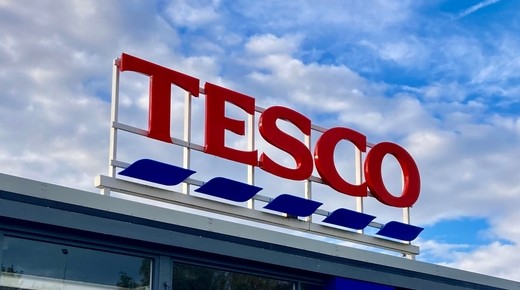
British retail chain Tesco has become the first grocery retailer in the UK to replace traditional barcodes with GS1 2D barcodes across an entire product line. This marks another significant step in the transition to the next generation of barcodes—a development that Danish companies should also follow closely.
The global retail industry is undergoing one of its biggest changes since the traditional barcode was introduced more than 50 years ago.
While the classic EAN barcode primarily identifies a product, 2D barcodes—such as QR codes powered by GS1—allow for much more information to be shared with a single scan. This can create value both in the supply chain and for consumers.
Tesco is now taking a major step by implementing the technology across its entire own-brand sausage range. This makes 2D barcodes an integrated part of daily operations rather than just a limited pilot project.
For customers in the store, the transition will be virtually invisible. Products can still be scanned at the checkout, exactly as they are today.
However, the new barcode hides far more possibilities.
A QR code powered by GS1 can, among other things, contain or provide access to:
This means that the same barcode can create value across the entire value chain—from production and logistics to retail and consumers.
For Tesco, the benefits are primarily about making internal processes more efficient.
When batch and date information can be included directly in the scan, it becomes easier to:
In the event of a recall, companies can, for example, simply identify the affected batch numbers rather than removing all products from the shelves. This reduces both resource waste and unnecessary costs.
Tesco is not the first company to work with 2D barcodes. However, the rollout shows that the technology is now moving from pilot projects to large-scale implementation.
This aligns with the global ambition that retailers and manufacturers should be ready to scan and use the next generation of barcodes at the point of sale by the end of 2027.
When one of Europe's largest grocery chains takes this step, it sends a clear signal to the rest of the market that the technology is mature and ready for widespread adoption.
The development does not stop at the British borders.
In the coming years, Danish companies will also experience increasing demands for product data, traceability, and digital information. At the same time, expectations from trading partners, authorities, and consumers are growing.
Companies that start implementing GS1 standards and 2D barcodes now will have a stronger foundation for meeting future requirements – while also being able to streamline internal processes and create new digital opportunities.
Even though many companies are still in the initial phases, there is good reason to begin the work now. The transition to 2D barcodes is not just about replacing a barcode, but about ensuring that the company's product data is structured, standardized, and ready for the digital value chains of the future.
GS1 Denmark therefore recommends that companies:
GS1 Denmark offers guidance, webinars, and a range of free materials to help companies plan and execute the transition.
Find all information about 2D barcodes
This article is based on the GS1 UK news story: Tesco becomes the first UK supermarket to transition an entire product range to QR codes powered by GS1.

GS1Trade Image provides professional marketing and planogram images that meet retailers' requirements and imaging guidelines.
If you want to create your own product photos, we can also help you get certified.

GS1Trade Sync is a data pool for product data exchange that your trading partners can access.
GS1Trade Sync streamlines data exchange between trading partners because data only needs to be entered in one place. This increases the quality of product data and creates value for you - and the entire value chain.

GS1Trade Packaging is a packaging data system that gathers your packaging data in one place. The system ensures efficient collection, structuring, and declaration of packaging data, and makes it easy to exchange packaging data with other companies.

GS1Trade Exact ensures the quality of your product data. All physical products are checked against the data registered in GS1Trade Sync.
With this service, you get verified and quality-assured data that benefits the entire supply chain.

GS1Trade Transact handles the digital receipt of orders and the sending of documents to your customers. You can choose whether to integrate it with your financial system or access it online.

GTIN (also known as EAN) stands for “Global Trade Item Number” and is the number sequence shown beneath a barcode symbol.
GTIN (EAN) is a global standard used to uniquely identify digital and physical products, allowing the barcode to be scanned anywhere in the world throughout the supply chain.

A GLN (also known as EAN) allows you to uniquely identify physical, functional, legal, or digital entities. This can include the sender, receiver, buyer, seller, supplier, manufacturer, delivery location, billing location, store, or internal departments.