Colloquially, many know GTIN as a barcode, but technically, GTIN is the number found beneath the barcode symbol itself, and can therefore also be used for other technologies such as 2D barcodes and RFID tags.
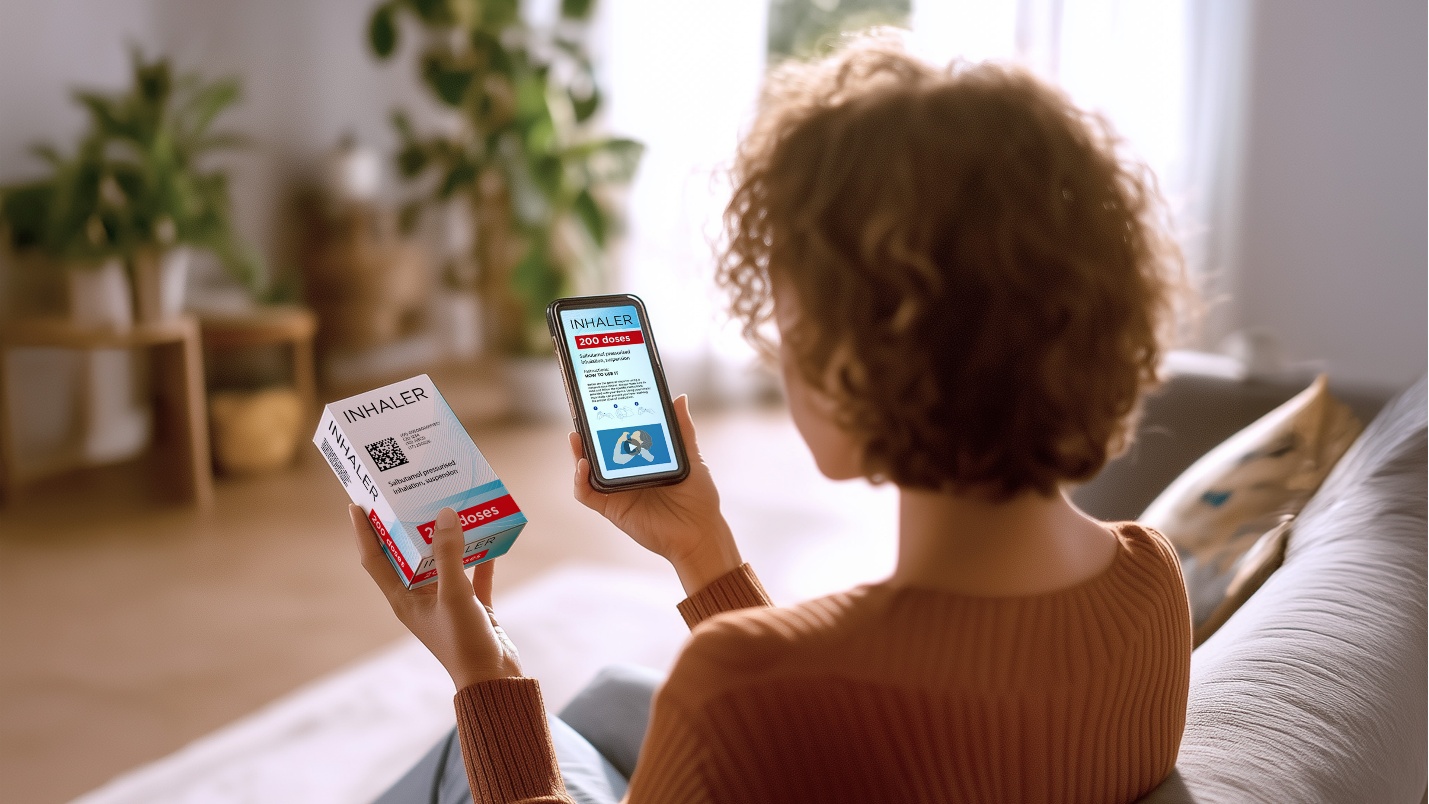
At the GS1 Healthcare Global Conference 2025 in Brussels, GS1 announced a global breakthrough that allows patients and healthcare professionals to access reliable medication information directly via their smartphones. The collaboration between GS1 and Google means that the GS1 DataMatrix, which is currently found on millions of medicine packages, can now be scanned directly with Google Lens – without the need for a separate barcode app.
When a user scans a medicine package, it opens access to verified information from the manufacturer or an authorized data provider. This provides a new, simple, and secure way to retrieve updated knowledge about medication.
Safe use of medication requires quick and clear access to relevant information – especially in situations where questions arise. Traditionally, important information has either been written in very small print, hidden inside physical packaging, or placed in systems not designed for public access.
With the new solution, the GS1 DataMatrix becomes a direct link between the patient and the information provided online by the manufacturer.
This means:
The transition to electronic package inserts (ePILs) also offers significant environmental benefits. In the US, it is estimated that printed package inserts consume:
Digital access significantly reduces this paper consumption and demonstrates how modern technology can support both sustainability and patient safety.
GS1 DataMatrix is already used internationally for the identification and traceability of medicine. With Google's support, it will now be possible to read this standard directly using tools already found on billions of phones worldwide.
The solution does not replace existing national traceability and security systems, but complements them by creating a common, global access layer. To foster innovation, relevant components will also be made openly available so that developers can integrate scanning into their own systems.
The collaboration with Google supports GS1’s Vision 2030, which focuses on interoperable and reliable health data globally.
What has for years been merely a printed symbol on packaging now becomes an active safety tool – a direct link between manufacturer and patient.
A familiar mark on billions of medicine packages thus becomes the key to better information, higher safety, and a more modern and sustainable healthcare sector.

GS1Trade Image provides professional marketing and planogram images that meet retailers' requirements and imaging guidelines.
If you want to create your own product photos, we can also help you get certified.

GS1Trade Sync is a data pool for product data exchange that your trading partners can access.
GS1Trade Sync streamlines data exchange between trading partners because data only needs to be entered in one place. This increases the quality of product data and creates value for you - and the entire value chain.

GS1Trade Packaging is a packaging data system that gathers your packaging data in one place. The system ensures efficient collection, structuring, and declaration of packaging data, and makes it easy to exchange packaging data with other companies.

GS1Trade Exact ensures the quality of your product data. All physical products are checked against the data registered in GS1Trade Sync.
With this service, you get verified and quality-assured data that benefits the entire supply chain.

GS1Trade Transact handles the digital receipt of orders and the sending of documents to your customers. You can choose whether to integrate it with your financial system or access it online.

GTIN (also known as EAN) stands for “Global Trade Item Number” and is the number sequence shown beneath a barcode symbol.
GTIN (EAN) is a global standard used to uniquely identify digital and physical products, allowing the barcode to be scanned anywhere in the world throughout the supply chain.

A GLN (also known as EAN) allows you to uniquely identify physical, functional, legal, or digital entities. This can include the sender, receiver, buyer, seller, supplier, manufacturer, delivery location, billing location, store, or internal departments.