Colloquially, many know GTIN as a barcode, but technically, GTIN is the number found beneath the barcode symbol itself, and can therefore also be used for other technologies such as 2D barcodes and RFID tags.
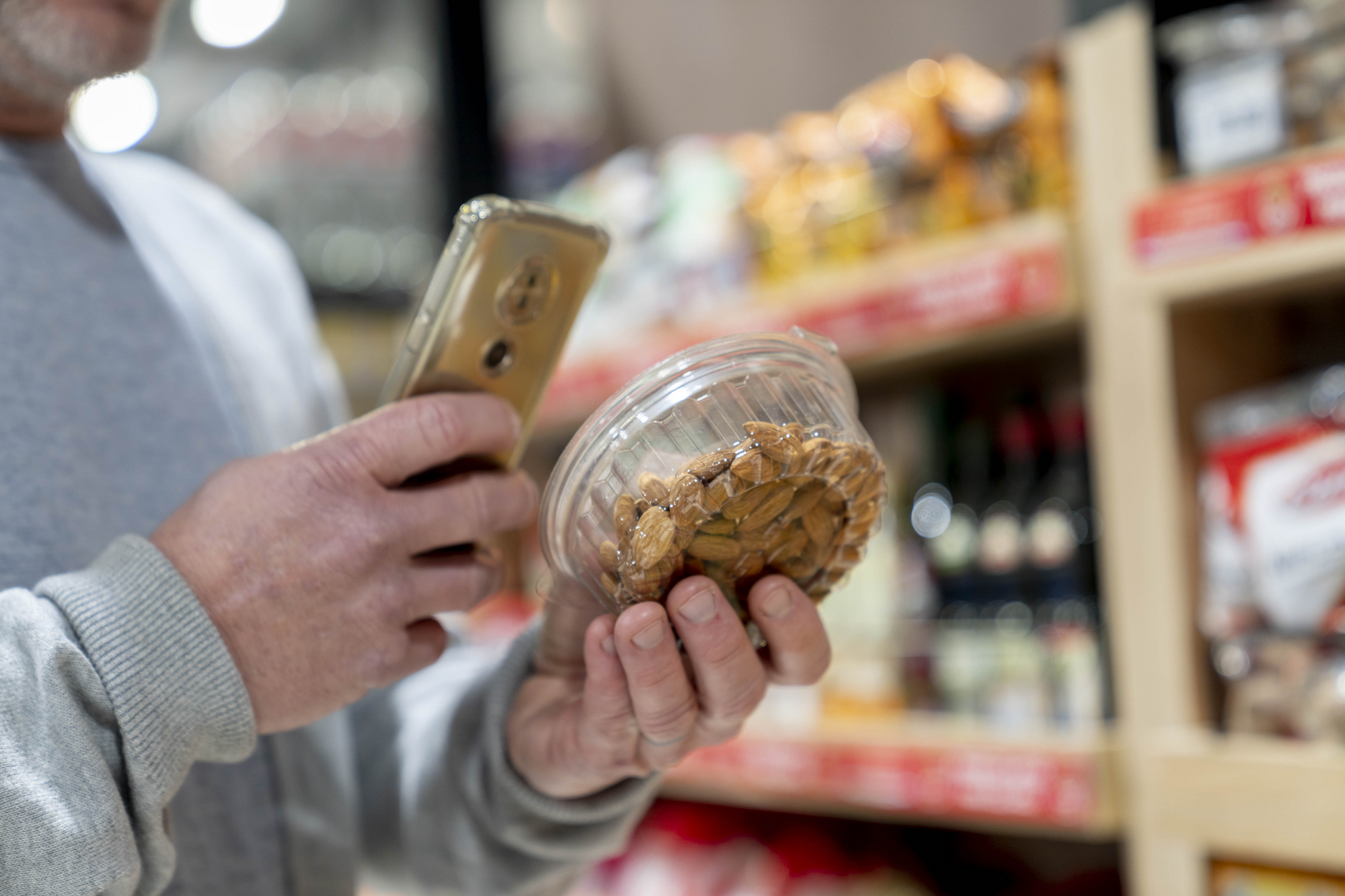
The classic barcode has been one of the retail industry's most important technologies for more than 50 years. Since the first scan in an American supermarket chain in 1974, the barcode has made it possible to automate sales, inventory management, and logistics in global supply chains.
It still works effectively today – but the world around it has changed.
Businesses today need far more information about products than before, and both consumers and partners expect easy access to product data, traceability, and digital information directly from the product.
It is precisely these needs that are driving the development toward 2D barcodes – such as QR codes powered by GS1.
The internet, smartphones, and digital technologies have changed the expectations for information held by both businesses and consumers.
Businesses increasingly need more data linked to the product, for instance to manage:
At the same time, many companies want to use the product as a digital gateway to information, service, and dialogue with the consumer after the purchase.
Consumers are increasingly demanding transparency regarding the products they buy.
This could, for example, be questions such as:
That type of information cannot be contained in a traditional 1D barcode.
At the same time, the retail industry has clear requirements: point-of-sale systems must remain fast, stable, and functional—even without an internet connection. Furthermore, the transition to new 2D barcodes must not require companies to replace all their existing IT systems.
That is why the industry, together with GS1, has worked on a solution that can meet all these needs.
The answer is 2D barcodes—such as QR codes—based on GS1 Digital Link.
The new codes combine two important functions:
This means that one barcode can be used both in the supply chain and as digital access to product information.
A 2D code can contain far more information than a traditional barcode. In addition to the product's GTIN, it can, for example, also contain:
When the barcode is scanned at the checkout, the product identification is used – just as it is today. However, if it is scanned with a smartphone, it can lead to a variety of different information sources.
This could include:
Even as technology evolves, the solution is still built on GS1 standards. The rules for product identification using GTINs remain in effect, ensuring that the system functions globally across supply chains. This allows companies to gain more data, better traceability, and new digital opportunities without compromising efficient scanning at the checkout.

GS1Trade Image provides professional marketing and planogram images that meet retailers' requirements and imaging guidelines.
If you want to create your own product photos, we can also help you get certified.

GS1Trade Sync is a data pool for product data exchange that your trading partners can access.
GS1Trade Sync streamlines data exchange between trading partners because data only needs to be entered in one place. This increases the quality of product data and creates value for you - and the entire value chain.

GS1Trade Packaging is a packaging data system that gathers your packaging data in one place. The system ensures efficient collection, structuring, and declaration of packaging data, and makes it easy to exchange packaging data with other companies.

GS1Trade Exact ensures the quality of your product data. All physical products are checked against the data registered in GS1Trade Sync.
With this service, you get verified and quality-assured data that benefits the entire supply chain.

GS1Trade Transact handles the digital receipt of orders and the sending of documents to your customers. You can choose whether to integrate it with your financial system or access it online.

GTIN (also known as EAN) stands for “Global Trade Item Number” and is the number sequence shown beneath a barcode symbol.
GTIN (EAN) is a global standard used to uniquely identify digital and physical products, allowing the barcode to be scanned anywhere in the world throughout the supply chain.

A GLN (also known as EAN) allows you to uniquely identify physical, functional, legal, or digital entities. This can include the sender, receiver, buyer, seller, supplier, manufacturer, delivery location, billing location, store, or internal departments.