Colloquially, many know GTIN as a barcode, but technically, GTIN is the number found beneath the barcode symbol itself, and can therefore also be used for other technologies such as 2D barcodes and RFID tags.

How do we reduce medication errors in the healthcare system? And can a circular economy even function without reliable product data?
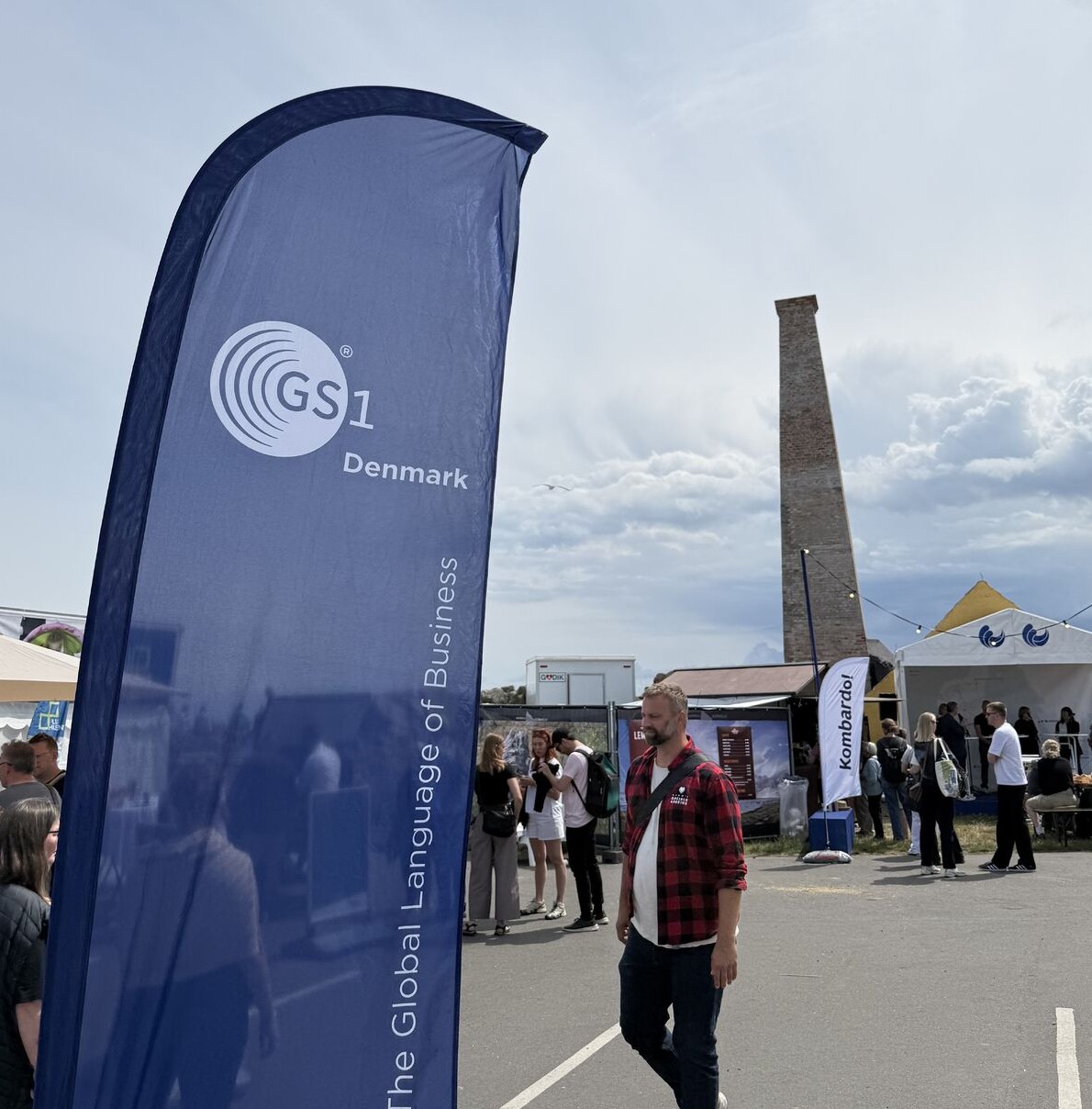
These were two of the questions GS1 Denmark put up for debate at Folkemødet 2026, where politicians, companies, patient representatives, and experts discussed how data and standards can be translated into concrete solutions for some of society's greatest challenges.
Can a circular economy function without reliable product data? That was the question GS1 Denmark put up for debate on Thursday at Folkemødet.
The panel's answer was clear. Data does not solve every challenge, but without common, reliable, and accessible product data, it will be difficult to turn the circular economy into anything more than good intentions.
The debate focused on the new European requirements for, among other things, digital product passports, increased repairability, and documentation of product properties. There was broad consensus that consumers, companies, and authorities need better access to product information if products are to be repaired, reused, and recycled to a much greater extent.
Three themes recurred throughout the debate:
Standards and structured data play a central role here. When product information can be shared and understood across companies, national borders, and value chains, it creates the foundation for documentation, repair, reuse, and more sustainable business models.

On Friday, the focus shifted to the healthcare sector, where the question was whether barcode scanning could be part of the solution to one of healthcare's most persistent problems: medication errors.
Medication errors remain among the most frequent adverse events in the healthcare system. At the same time, technology already exists that can help reduce the risk: barcode scanning of medication at the point of administration. The debate was based on the question of why this solution has not yet been implemented more consistently in Denmark.
The panel was broadly composed of representatives from Danish Regions, the Danish Nurses' Organization, the Danish Society for Patient Safety, DaneAge, and the Danish Parliament. Across different perspectives, there was agreement that medication errors remain a serious problem and that there is a need for more structural support for safe medication practices.
The debate also showed that barcode scanning is not a miracle cure in itself. The technology must be supported by well-functioning workflows, user-friendly systems, and a culture where patient safety is a high priority. However, the panel also assessed that scanning medication has significant potential as an additional safety net for both patients and healthcare staff.
One of the concrete proposals brought forward was to consolidate existing initiatives into a comprehensive "medication package" that can help prevent medication errors and strengthen patient safety across the healthcare system.
Although the topics were different, both debates pointed in the same direction. If we are to succeed with the green transition while simultaneously creating a safer and more efficient healthcare system, it requires that data can be shared, understood, and used across all stakeholders.
This is precisely where common standards make a difference. They create the foundation for better decisions, more efficient workflows, and new digital solutions – for the benefit of companies, authorities, healthcare staff, and citizens.
GS1 Denmark thanks the panelists, partners, and the audience for two engaging debates and looks forward to continuing the work of turning dialogue into action.

GS1Trade Image provides professional marketing and planogram images that meet retailers' requirements and imaging guidelines.
If you want to create your own product photos, we can also help you get certified.

GS1Trade Sync is a data pool for product data exchange that your trading partners can access.
GS1Trade Sync streamlines data exchange between trading partners because data only needs to be entered in one place. This increases the quality of product data and creates value for you - and the entire value chain.

GS1Trade Packaging is a packaging data system that gathers your packaging data in one place. The system ensures efficient collection, structuring, and declaration of packaging data, and makes it easy to exchange packaging data with other companies.

GS1Trade Exact ensures the quality of your product data. All physical products are checked against the data registered in GS1Trade Sync.
With this service, you get verified and quality-assured data that benefits the entire supply chain.

GS1Trade Transact handles the digital receipt of orders and the sending of documents to your customers. You can choose whether to integrate it with your financial system or access it online.

GTIN (also known as EAN) stands for “Global Trade Item Number” and is the number sequence shown beneath a barcode symbol.
GTIN (EAN) is a global standard used to uniquely identify digital and physical products, allowing the barcode to be scanned anywhere in the world throughout the supply chain.

A GLN (also known as EAN) allows you to uniquely identify physical, functional, legal, or digital entities. This can include the sender, receiver, buyer, seller, supplier, manufacturer, delivery location, billing location, store, or internal departments.