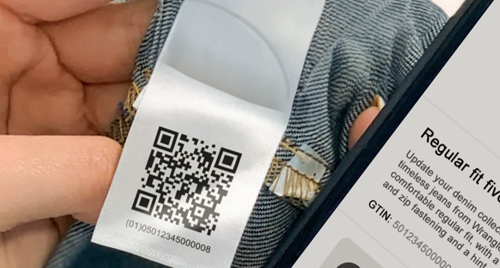
Colloquially, many know GTIN as a barcode, but technically, GTIN is the number found beneath the barcode symbol itself, and can therefore also be used for other technologies such as 2D barcodes and RFID tags.

Hvis en indkøber, en logistikmedarbejder og en operationssygeplejerske har forskellige oplysninger om medicinsk udstyr opstår der hurtigt problemer. Måske bliver den forkerte vare bestilt. Måske mangler vigtig information om opbevaring eller anvendelse. Og i værste fald kan det få konsekvenser for patientbehandlingen.
Derfor arbejder regioner og leverandører netop nu sammen med GS1 på at etablere et fælles sprog for varestamdata for medicinsk udstyr.
– Varestamdata er alle de oplysninger om et produkt, som ikke ændrer sig i varens rejse fra producent til patient. Det kan være størrelse, vægt, billede, opbevaringstemperatur, brugervejledning eller hvordan produktet skal affaldssorteres. Man kan sammenligne det med alle de oplysninger, du kan se om en liter mælk på nemlig.com’s hjemmeside, siger Anne Marie Lei, Head of Healthcare i GS1 Denmark.
Selvom varestamdata måske lyder som et teknisk begreb, er det i praksis de grundlæggende oplysninger, der får hele forsyningskæden til at fungere – fra indkøb og lagerstyring til klinisk anvendelse.
Varestamdata er alle de oplysninger om et produkt, som ikke ændrer sig i varens rejse fra producent til patient.
Medicinsk udstyr udgør omkring 80 procent af regionernes indkøb. Alligevel har produktdata historisk været delt i forskellige formater og med forskellige krav afhængigt af modtageren.
– Man kan godt sige, at lige nu er det noget rod derude. Man efterspørger forskellige oplysninger i forskellige formater, og det gør det svært at højne datakvaliteten, siger Anne Marie Lei.
Konsekvensen er ofte manuelt arbejde, dobbeltregistreringer og klinikere, der må bruge tid på at lede efter oplysninger, som burde være let tilgængelige.
For at løse udfordringen er regioner, leverandører og GS1 Denmark enedes om at bruge et uniformt datasæt for medicinsk udstyr med udgangspunkt i den europæiske datamodel ECHO. Man kan sige, at målet er at skabe et fælles sprog for de oplysninger, der skal følge medicinsk udstyr gennem hele dets livscyklus.
– Vi så en mulighed for at gøre det nemmere for producenter, importører og distributører, som kunne slippe for de mange regneark, og for datamodtagerne, som kunne nøjes med én kilde og dermed arbejde mere systematisk med datakvaliteten, siger hun.
Når oplysninger om produkter er forskellige fra system til system, påvirker det ikke kun administrationen. Det kan også påvirke driften og patientsikkerheden.
– Medicinsk udstyr som implantater er et godt eksempel. Man kan blive nødt til at aflyse en operation, hvis man har bestilt noget forkert. Det koster både tid og penge, siger Anne Marie Lei.
Danske hospitaler indkøber medicinsk udstyr for 30 milliarder kroner om året. Derfor er korrekte og tilgængelige produktdata en forudsætning for, at udstyret er på det rette sted på det rette tidspunkt og bliver brugt rigtigt.
– Når der er én fælles sandhed om varen, bliver forsyningskæden mere robust og effektiv, siger hun.
Værdien af varestamdata ligger ikke kun i selve oplysningerne. Den ligger også i den infrastruktur, der gør det muligt at dele dem sikkert og ensartet mellem producenter, leverandører og regioner.
Derfor handler arbejdet ikke blot om at definere data, men også om at etablere systemer og standarder, som sikrer, at oplysningerne kan genbruges på tværs af organisationer og it-systemer.
– Vi har lavet et fælles datasæt baseret på vores standard i stedet for regneark på kryds og tværs. Det kræver noget af alle parter, men til gengæld får vi et fælles sprog, som regioner og leverandører kan tale sammen, siger Anne Marie Lei.
Regionerne er i gang med at tilpasse deres systemer til den nye model, mens producenterne løbende indarbejder flere data. Målet er en mere sammenhængende og skalerbar infrastruktur, hvor pålidelige produktdata kan deles og genbruges på tværs af sundhedsvæsenet.
– Varestamdata er ikke blot et teknisk register. Det er et strategisk fundament for bedre beslutninger, mere robuste forsyningskæder og et sundhedsvæsen, hvor medarbejderne kan bruge mindre tid på at lede efter information – og mere tid på patienterne.

GS1Trade Image provides professional marketing and planogram images that meet retailers' requirements and imaging guidelines.
If you want to create your own product photos, we can also help you get certified.

GS1Trade Sync is a data pool for product data exchange that your trading partners can access.
GS1Trade Sync streamlines data exchange between trading partners because data only needs to be entered in one place. This increases the quality of product data and creates value for you - and the entire value chain.

GS1Trade Packaging is a packaging data system that gathers your packaging data in one place. The system ensures efficient collection, structuring, and declaration of packaging data, and makes it easy to exchange packaging data with other companies.

GS1Trade Exact ensures the quality of your product data. All physical products are checked against the data registered in GS1Trade Sync.
With this service, you get verified and quality-assured data that benefits the entire supply chain.

GS1Trade Transact handles the digital receipt of orders and the sending of documents to your customers. You can choose whether to integrate it with your financial system or access it online.

GTIN (also known as EAN) stands for “Global Trade Item Number” and is the number sequence shown beneath a barcode symbol.
GTIN (EAN) is a global standard used to uniquely identify digital and physical products, allowing the barcode to be scanned anywhere in the world throughout the supply chain.

A GLN (also known as EAN) allows you to uniquely identify physical, functional, legal, or digital entities. This can include the sender, receiver, buyer, seller, supplier, manufacturer, delivery location, billing location, store, or internal departments.