|


GTIN
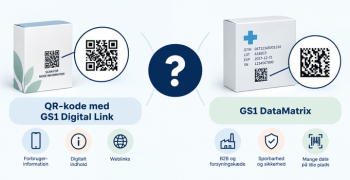
Colloquially, many know GTIN as a barcode, but technically, GTIN is the number found beneath the barcode symbol itself, and can therefore also be used for other technologies such as 2D barcodes and RFID tags.
Colloquially, many know GTIN as a barcode, but technically, GTIN is the number found beneath the barcode symbol itself, and can therefore also be used for other technologies such as 2D barcodes and RFID tags.
In the changing textile and fashion landscape, GS1 standards help companies achieve global reach. They facilitate cross-border trade and transport by creating a common language for cooperation across all parts of the value chain. Our standards for barcodes, for example, play a role around the world, around the clock — for example, when clothes are scanned in a store and when shipments are scanned, achieving traceability from manufacturer to consumer. In fact, the world sounds surpassing 6 billion 'beeps' a day when a GS1 barcode is scanned. Today, GS1 makes a difference to over 2 million members worldwide, helping them work efficiently, safely and sustainably — for their own good, their customers, and the environment.
EPC stands for Electronic Product Code and is the GS1 global standard for RFID technology. The standard has been developed in collaboration with RFID tag/reader manufacturers, industry and retail. Briefly, the EPC standard defines these three key points:
1. How to store data in an RFID tag?
2. How does an RFID tag communicate this data to the scanner?
3. How does the scanner, in the end, communicate with the business system?

The data structure of an RFID tag (see above) is in effect a simple continuation of the well-known GS1 standard for barcodes. The EPC code of an RFID tag consists of the product's barcode number, the Global Trade Item Number (GTIN) with the addition of a unique serial number for each individual product and instructions for the scanner.
The EPC standard defines the structure of how tags and scanners speak together. This means that as long as both parts comply with the EPC standard, then any combination of tags and scanners will be able to work together. To ensure this, RFID manufacturers have reduced the variety of tags and scanners by agreeing to use passive, Ultra High Frequency (UHF) tags.
The EPC standard also defines how the scanner collects the received data and forwards it to the IT system — ultimately ensuring that all parts of your RFID solution can “talk together”. This enables efficient, automatic communication of data both between your internal departments and with your suppliers and external partners.
If you already use GS1 barcode standards to label your products, you're well on your way, as these are exactly the same standards used for EPC/RFID.
The use of globally standardized RFID tags has made the market reach a critical mass: 6.9 billion RFID tags were used in 2014. This has resulted in a 75% price drop compared to the price per roof in 2011.
Since EPC is an open standard, no proprietary technology is used. This means that you can invest in an RFID solution without worry, as any EPC/RFID tag will work with any EPC/RFID scanner.
Our standards are developed by EPC users themselves — with an eye to best practices in the use of RFID technology.
When you apply GS1's global standard, you can get LokalGS1 support to get started using EPC/RFID.
GS1 has been providing standards for global supply chains for 40 years. Based on such a stable and proven platform, technology developers can focus on creating new solutions without worrying about compatibility.

As a membership organization with over 15,000 members, we at GS1 Denmark are always looking for new ways to create benefits and growth for our members. We have already helped several companies on their way to implement RFID technology and are always ready to lend a helping hand. The previous page shows an example of a complete RFID implementation process prepared by our colleagues at GS1 UK. The example shows some of the questions that may arise in the process. We at GS1 Denmark would like to help you find answers to these questions based on our experience and examples from the industry.
Are you in full swing, or are you just playing with the idea of RFID in your company, and would you like an answer to the following:
What are EPC and RFID?
• What applications can be found for RFID technology in your supply chain?
• What impact will it have on your business?
• How do you get it right — the first time?
Do you still need help? Reach out to our support team. We are always ready to help.