GTIN
Colloquially, many know GTIN as a barcode, but technically, GTIN is the number found beneath the barcode symbol itself, and can therefore also be used for other technologies such as 2D barcodes and RFID tags.
Colloquially, many know GTIN as a barcode, but technically, GTIN is the number found beneath the barcode symbol itself, and can therefore also be used for other technologies such as 2D barcodes and RFID tags.
We advise healthcare professionals on the benefits of GS1 standards, with a focus on increased patient safety and improved inventory management. This makes work processes easier and more automated.
With a single barcode scan, it is possible, for example, to register which implant a patient has received and which medicine has been administered. This ensures that the right medicine is given to the correct patient in the prescribed strength and form.
Scanning of pharmaceuticals is a concrete and effective tool to reduce medication errors. When medicines are scanned for preparation and administration, verification that the right patient is receiving the right medicine - at the right dose and at the right time, is supported.
At the same time, registration becomes an integral part of the workflow rather than an additional task. It reduces manual entry, reduces situations of doubt and increases the safety of healthcare professionals. The barcode thus becomes the link between system requirements and clinical reality - for the benefit of both patients and employees.


Are you curious about how increased barcode scanning can support Danish hospitals?
Through interviews with selected stakeholders, we have mapped the challenges and opportunities associated with mandatory barcode scanning when dispensing medicine from the medication room.
The analysis highlights that barcode scanning can strengthen both patient safety and work efficiency - but that there may also be implementation challenges. Get all the key insights here.
Accurate and up-to-date master data is essential for an efficient and connected healthcare system. Today, product data is often managed locally across regions and hospitals - frequently using spreadsheets, PDFs, and manual processes. This leads to duplicated work, inconsistent data, and a lack of transparency across systems and organisations.
That is why the healthcare sector is working towards establishing shared product master data as a common foundation. The ambition is to create a single authoritative data source - a single source of truth - where product data is maintained in one place and reused across procurement, logistics, and clinical operations.
When master data is shared, accurate, and easily accessible, healthcare professionals can spend less time managing data—and more time on patient care. Shared product master data is therefore not just a technical discipline, but a key part of the invisible infrastructure that makes healthcare more resilient and efficient.
Course
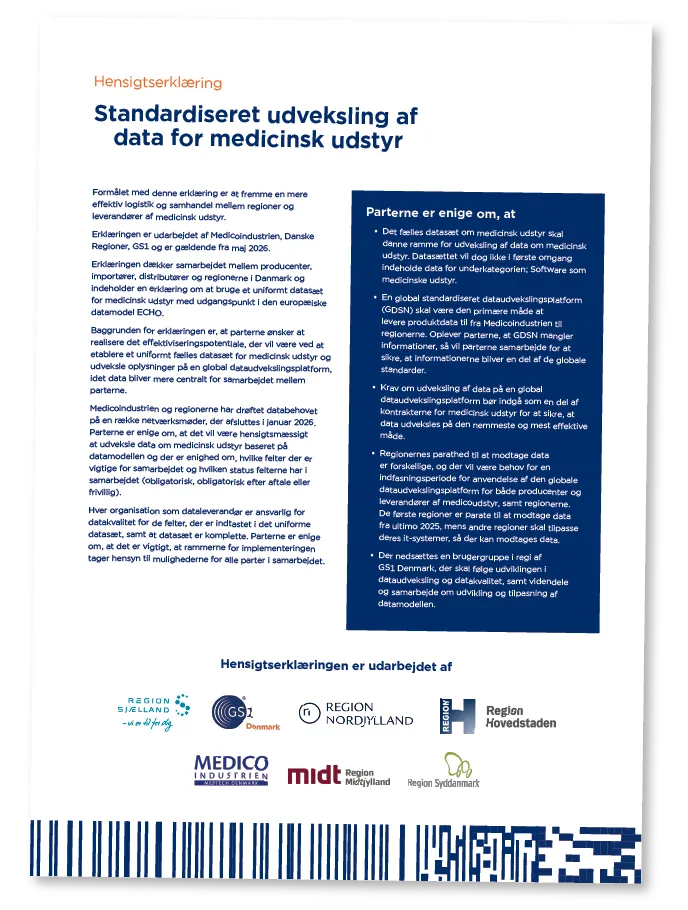
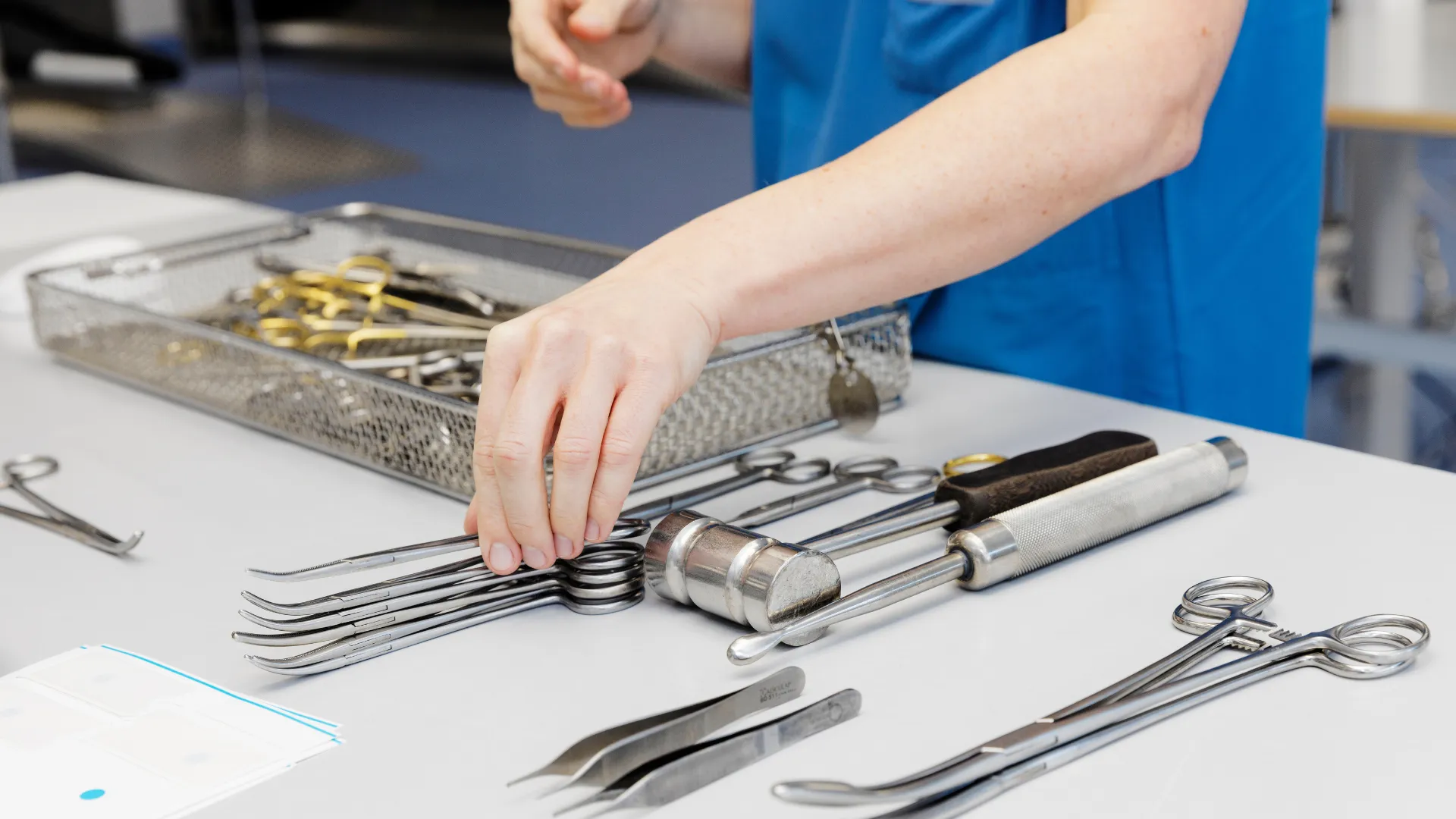
Learn more about GS1Trade Sync and how to use the system to register and exchange product master data for your medical devices.
Guide
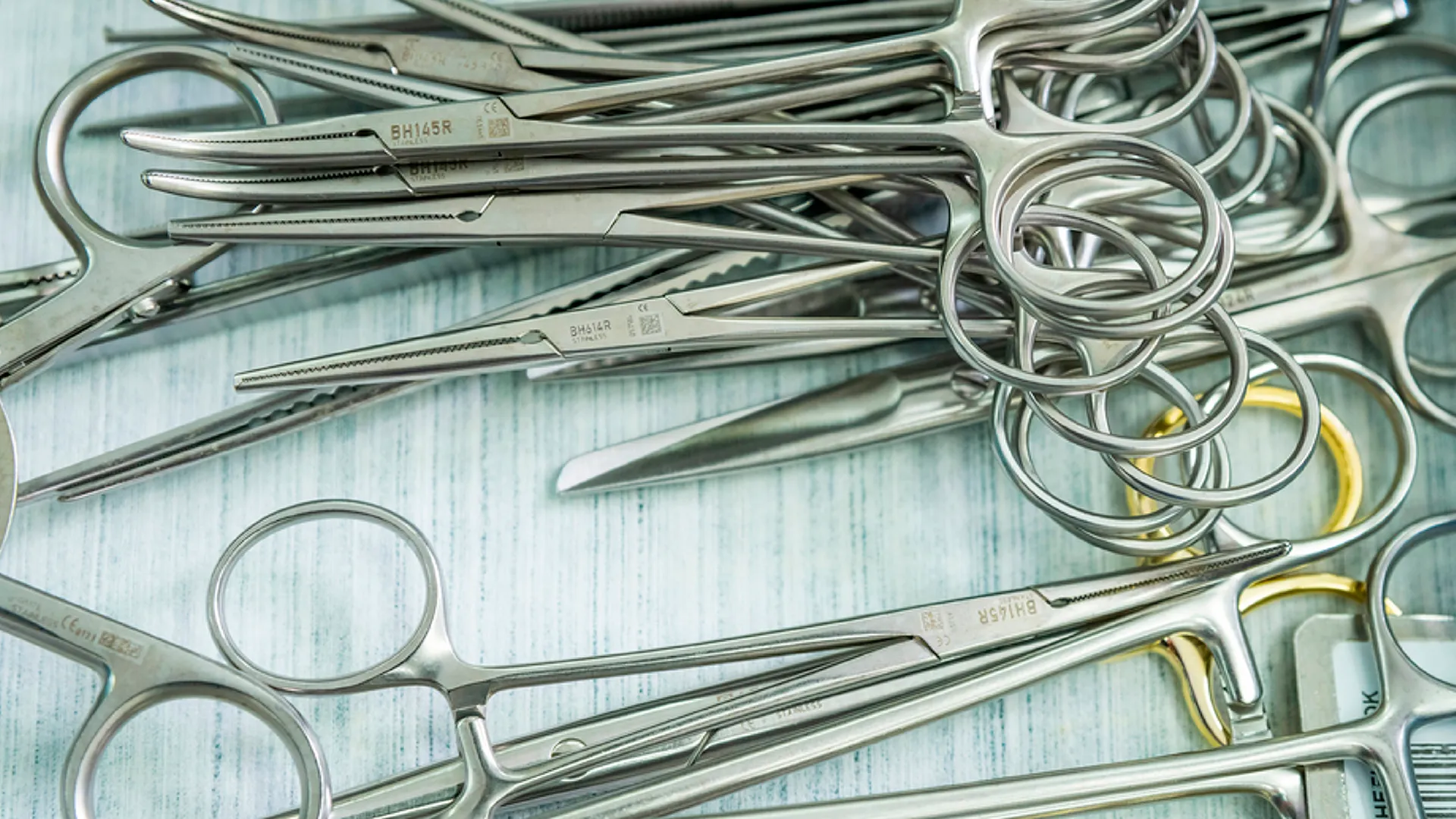
Are you a manufacturer or distributor of medical devices? Learn how to share product data with hospitals, regional authorities, and other trading partners.

Political agreement
Do you work with medical devices? Discover how manufacturers, suppliers, and regional healthcare authorities collaborate using standardised product data to improve data quality and create more efficient logistics.
Based on our 2024 analysis, we have presented five recommendations on how to enhance patient safety by reducing medication errors.
At GS1 Denmark, we believe that a national strategy for barcode scanning is necessary if we are to ensure confidence among healthcare staff and prevent patients from being harmed or even dying due to medication errors.
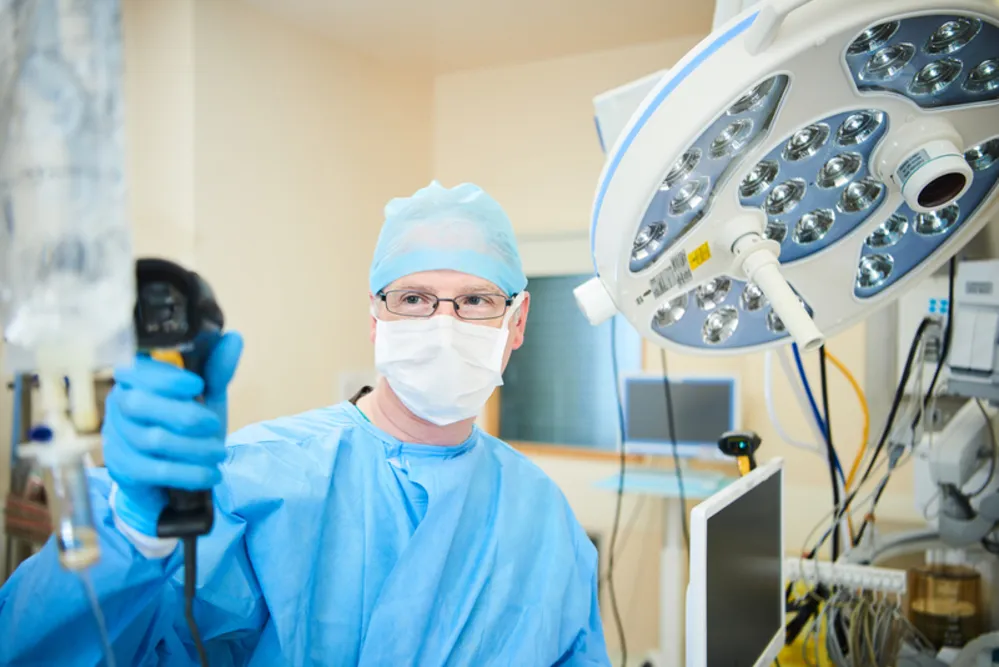

Products in healthcare are constantly moving - from supplier to warehouse, then to departments, and ultimately to the patient. A lack of visibility or inconsistent data across the supply chain can lead to delays, shortages, and disruptions in clinical workflows.
GS1 standards create a common language for data across the entire supply chain. With unique identification and consistent product data, it becomes possible to track products, understand usage, and plan more proactively. This strengthens supply security, reduces firefighting, and contributes to more stable patient care.
A strong supply chain is not just about logistics - it is a prerequisite for patient safety, efficient operations, and a more connected healthcare system.
In GS1Hospital, you can explore how GS1 standards support the many processes within a hospital where products are purchased, moved, or used.
Traceability and product identification are essential. It is crucial that the right medicine is given to the right patient and that, for example, it is possible to trace which implant has been inserted into a patient.
The GS1 barcode provides a globally unique identification and an automated way to register data. Watch this short e-learning animation about a patient pathway and the importance of product identification, and see how the barcode can be used to achieve increased patient safety, improved inventory management, and faster recalls.
Globally unique GS1 barcodes on medicines and medical devices increase product traceability and enable better inventory management.
In pharmacies, department stockrooms, and large hospital warehouses alike, barcodes are used for electronic registration minimising manual handling and reducing the risk of errors.
Read the case story from Rigshospitalet in our Reference Book
We are ready to advise you on the benefits of using barcodes in inventory management. Please feel free to contact us.
There are many benefits to scanning medical devices and medicines. Manual processes are time-consuming and increase the risk of errors.
Globally unique barcodes enhance product traceability from manufacturer to warehouse and ultimately to the patient. It will always be possible to trace exactly which medicines were administered to which patient, or which implant was inserted into a patient.
Are you ready to work more with scanning and optimise a process where you use barcodes? We offer free guidance so please feel free to contact us.
Identification of clinical trial products is essential for the conduct of clinical studies. The investigational product must be easy to handle, and it is crucial that the right product is administered to the right patient.
GS1 Clinical Trial Standard is a global standard that ensures correct identification and labelling of investigational products with scannable barcodes. Clinical trial products are labelled differently depending on the sponsor and whether the trial is investigator initiated.
Harmonising labelling with a scannable barcode makes the handling of clinical trial products easier, as healthcare professionals administering the investigational medicine can reduce manual work and minimise data entry errors.
We have compiled a number of relevant cases on how the health service uses our standards.
If you have questions about how to use our GS1 standards, you can receive help and guidance every day.
We are ready to guide you smoothly through the process.