8 min.
16.9.2019
GS1 marking in fire suits: Safety and inventory management in one solution
Text
Poul Breil-Hansen
Photo:
Internal
When things heat up and everything goes up in smoke, it is highly likely that the Danish Emergency Management Agency is there to help fight the fire and clean up.
If a chemical factory catches fire, a warehouse is in flames, or forest fires break out during a dry summer, the Danish Emergency Management Agency deploys expert teams and equipment.
Fire suits are a central part of the agency's equipment. For this reason, the Danish Emergency Management Agency has created an intelligent system that keeps track of inventory, cleaning, and maintenance. All based on a foundation of EPC standards from GS1.
- Over the last few decades, there has been growing attention on firefighter safety. During accidents, there are many hazardous emissions, such as soot particles, tar substances, and asbestos, says Niels Jørgen Fig, Head of the Danish Emergency Management Agency's Logistics Center for Clothing and Safety Equipment.


It is a huge advantage that everyone—whether in the warehouse, the sewing room, or the laundry—can scan a suit at any time and see exactly what needs to be done with that specific suit
Safety is the top priority
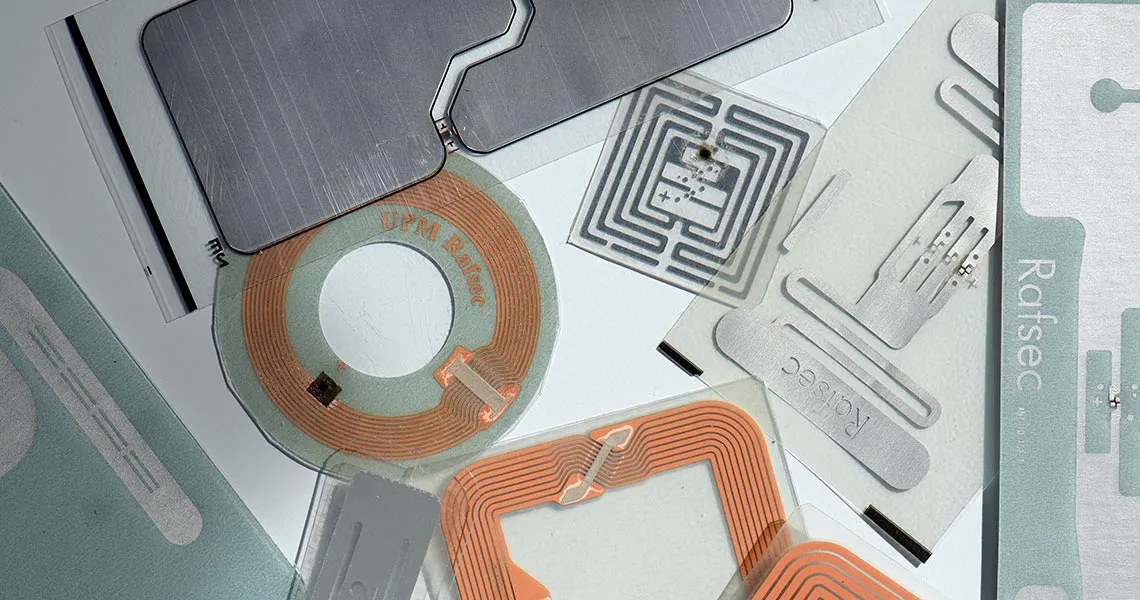
Suits, gloves, and masks must be in proper condition so that firefighters do not absorb toxic substances through inhalation. This requires correct maintenance, which is why a robust RFID chip has now been sewn into the fire suits.
- We are very careful about sorting suits, masks, gloves, and other equipment when our personnel finish an exercise, training session, or rescue operation. Everything is sorted into roll cages or plastic bags for "normally dirty," "particle and fire smoke contaminated," "flashover," and "asbestos," respectively. The suits must be treated and washed differently depending on the category, explains Niels Jørgen Fig.
The laundry staff can easily register the equipment because it only requires an RFID reader to scan the RFID chip. After washing, the equipment is inspected, and any need for repair is recorded. It is particularly important that the inner membranes are intact to block toxic substances and water penetration. There are 'gates' at every step of the value chain—from when the suits are taken off, through washing and maintenance, to placement in the warehouse ready-for-use—equipped with antennas or RFID readers that register the equipment and provide the user with information on a screen.
Digital anchor for equipment
RFID chips are fitted into almost all fire suits, allowing them to be registered at the Danish Emergency Management Agency's Logistics Center in Haderslev.
Furthermore, a touchscreen has been installed where employees can select from various actions. When a suit is issued, it is registered via an employee number.
- The RFID chip and the IT system that collects and presents the data mean that we have a digital handle on our equipment at all times. It is a huge advantage that everyone - whether in the warehouse, the sewing room, or the laundry - can scan a suit and see exactly what needs to be done with that specific item, says Niels Fig.

BENEFITS OF AN RFID-BASED SYSTEM:
- Everyone in the value chain always knows what to do with each individual piece of equipment
- Easy to get an overview of inventory and quickly track equipment
- Proper maintenance increases the safety and lifespan of equipment
- Data collection forms the basis for procurement and dialogue with suppliers.
Collection of essential data
The RFID system offers many advantages, including a better overview of equipment, traceability, and increased safety for employees. However, data collection is a particular benefit that provides a better foundation for procurement.
Data on how often different types of equipment require repair provides insight into the actual lifespan of the equipment and the challenges encountered. This knowledge was not available previously and is truly valuable input for our dialogue with suppliers.
- In addition, the system automatically monitors the number of washes a suit undergoes and provides a notification when a specific suit has been washed for the 20th time.
Then it is time for it to be re-impregnated. The impregnation is essential for the suit's ability to repel particles and dirt, and thus for the firefighter's safety.


FACTS ABOUT RFID
- An RFID tag is a small chip with antennas encased in plastic.
- It returns a response with its identification number when placed near an antenna (reader) connected to a computer.
- The RFID tag is designed to withstand industrial washing at high temperatures.