


10 min.
23.7.2026
When data flows - the manufacturer is spared the Excel work (I)
Text
Karen Gahrn
Photo:
Intern/Press
Just a few years ago, managing product master data for a medical device supplier could involve a multitude of spreadsheets, manual submissions, and local requirements from various hospitals and regions.
Today, the ambition is entirely different: information about medical devices should be shared automatically between suppliers and hospitals through common standards and a shared infrastructure.
For Johnson & Johnson, which supplies medical equipment to hospitals across the country, this development is about much more than just administrative convenience.
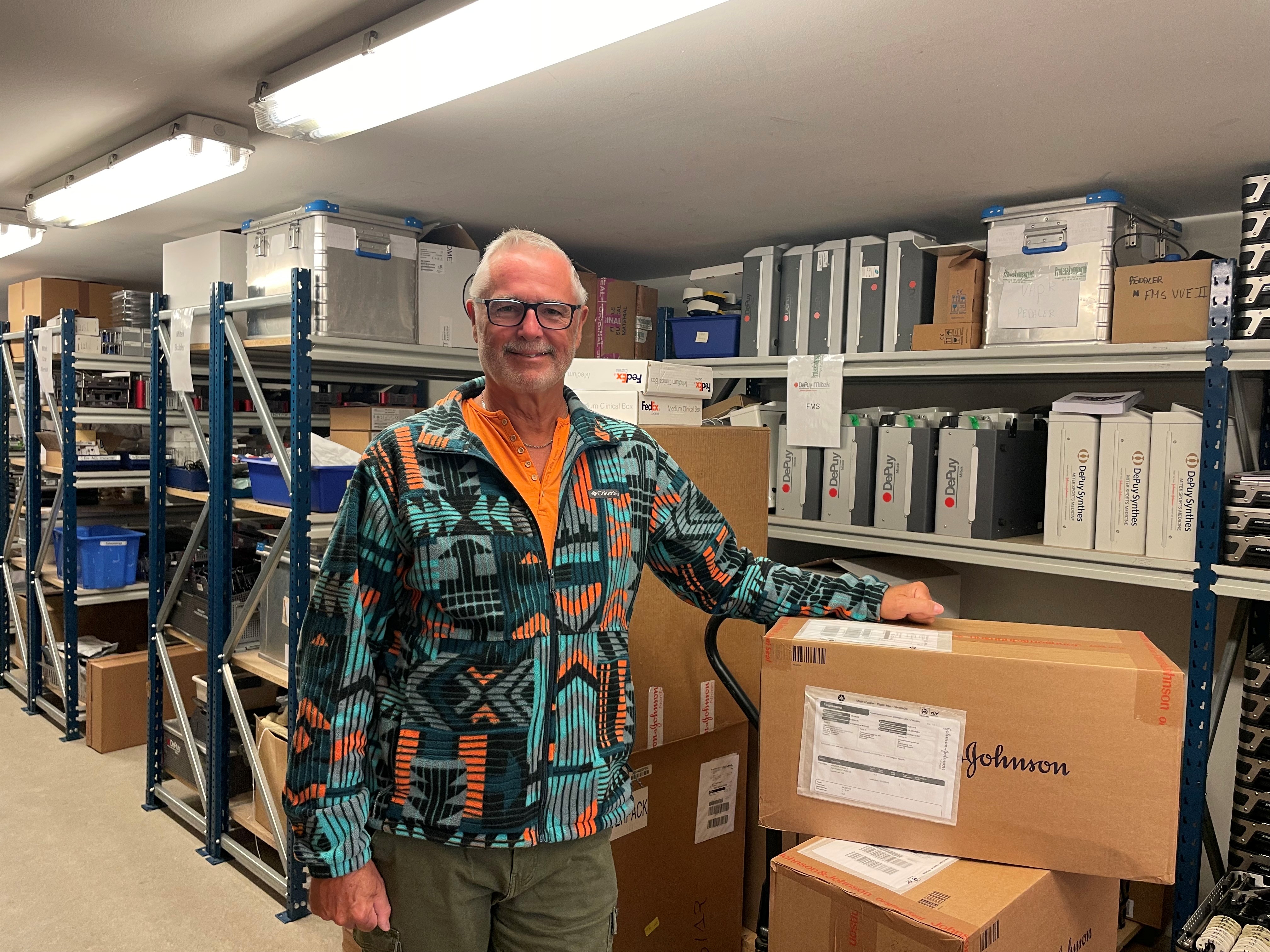
– For a long time, product master data was just something we kept on paper and in instruction manuals. It wasn't even ten years ago that everything was done on paper and piled up at the various operating sites, says John Lynegaard, Bids & Tenders Lead at Johnson & Johnson Denmark.
As hospitals' documentation requirements grew, paper-based solutions became harder to manage. Product information quickly became outdated, and the many manual processes made it difficult to ensure consistent and updated data.

When data must follow the product
Johnson & Johnson has factories and customers all over the world. Consequently, the need for a common structure for product data became increasingly clear.
– We sell products all over the world, and they vary from country to country. That makes it increasingly complicated to communicate accurate data on paper. Far too many resources are being used, says John Lynegaard.
The company therefore began consolidating product data into a common database. Later, this work was linked to GS1's international standards and the GDSN data network, which in Denmark forms the basis for the common ECHO model.
The goal is simple: data should be registered once and be reusable by everyone who needs it.
Johnson & Johnson has factories and customers all over the world. Consequently, the need for a common structure for product data became increasingly clear.
– We sell products all over the world, and they vary from country to country. That makes it increasingly complicated to communicate accurate data on paper. Far too many resources are being used, says John Lynegaard.
The company therefore began consolidating product data into a common database. Later, this work was linked to GS1's international standards and the GDSN data network, which in Denmark forms the basis for the common ECHO model.
The goal is simple: data should be registered once and be reusable by everyone who needs it.
Hospitals get the data they need
From the suppliers' perspective, the biggest benefit is that data can be shared more efficiently and with higher quality.
Previously, the regions often sent individual forms to suppliers, which then had to be filled out manually.
– Each region had its own system. It was really grueling Excel work for us. We spent an endless amount of time on it. We don't want to have to do that in the future, says John Lynegaard.
Instead, a common infrastructure is now being established where manufacturers make data available in one place, and where hospitals can retrieve exactly the information they need.
– An infrastructure has been created so that these small pieces of data can travel more easily and with better quality to those who need them, he says.

Each region had its own system. It was really grueling Excel work for us. We spent an endless amount of time on it. We don't want to have to do that in the future.
GS1 as a common focal point
An important part of the work has been the collaboration between the regions, suppliers, and GS1 Denmark.
Together, the parties have identified which information the regions need and how it can best be exchanged.
– We have sat down together across GS1, the regions, and the medical device industry to figure out what data is needed in Denmark and how it can best be delivered to the hospitals, says John Lynegaard.
He describes GS1 as a key driver in the work of creating common standards.
– It has been fun. We are all equally big nerds when it comes to data and refining data. It is always hard to implement change, but as soon as everyone was on board, I feel like things have really taken off.
For the suppliers, the perspective is clear: less time spent on administration and manual processes. For the hospitals, it means easier access to reliable product data.
– And for both parties, the goal is the same – to create a more efficient and cohesive flow of information regarding the medical equipment that the healthcare system depends on.