


8 min.
23.7.2026
When data flows - the hospital gains more time for patients (II)
Text
Karen Gahrn
Photo:
Intern/Press
When an employee at OUH or Hospital Sønderjylland scans an item number, they expect the correct item to appear on the screen. They expect the information to be accurate. And they expect the item to be available for order and use without any issues.
But behind that simple action lies extensive work with product master data.
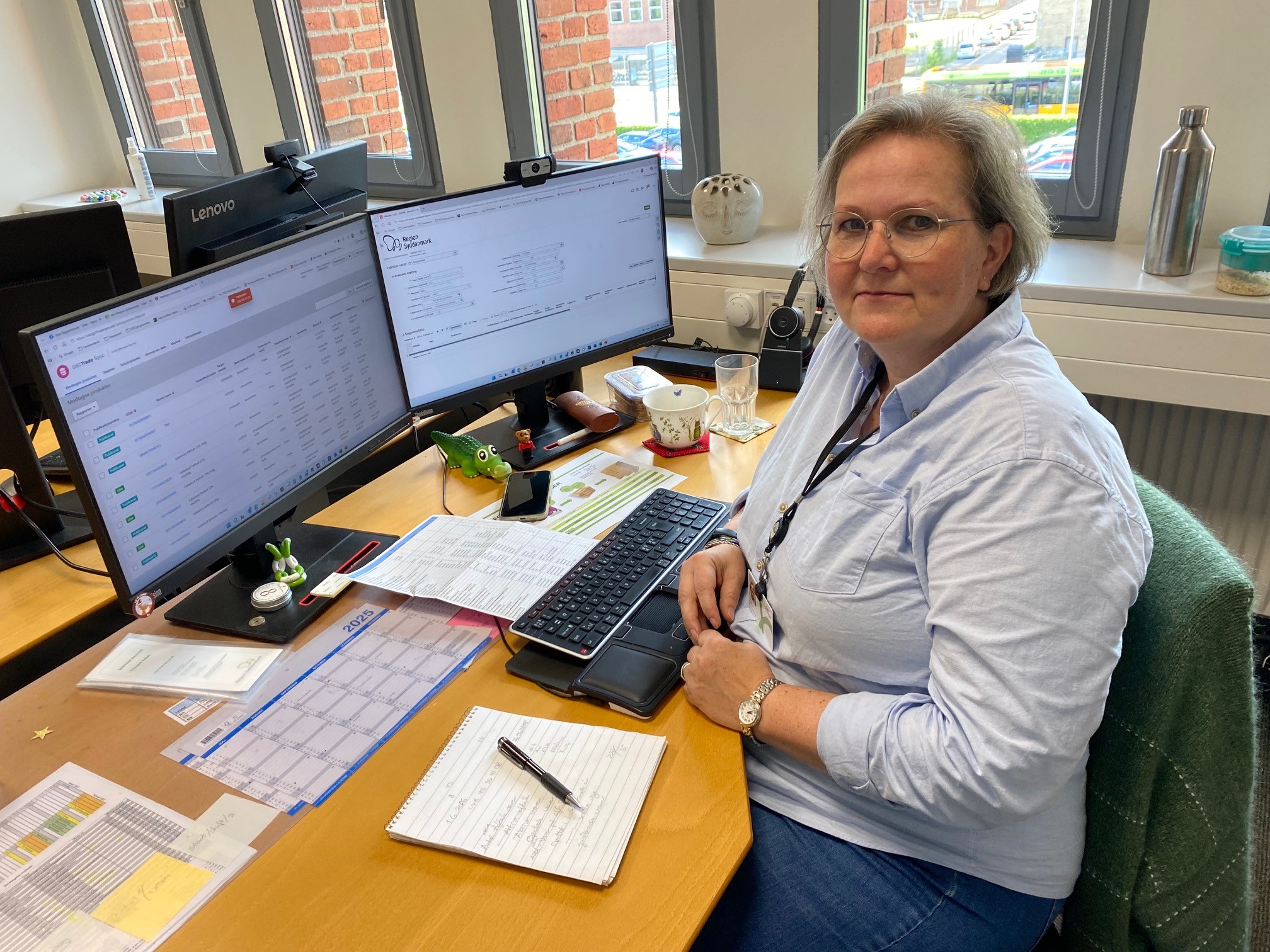
– I usually say that we are the oil that keeps all the hospital's gears turning. Without oil, everything seizes up. When our team ensures that data is accurate, everything works better and more efficiently, says Helene Andresen, master data specialist in the Region of Southern Denmark.
She is part of the region's master data team, which collects and quality-assures information on everything from implants and surgical equipment to paper plates and food.

When information is accurate and easily accessible, clinicians and nursing staff can spend less time searching for items and information – and more time on patients.
One common truth for all hospitals
Today, product data is consolidated into a shared system, so employees across the region's hospitals work from the same information.
– When an employee is out at the hospital with a box and an item number, the item can be retrieved with all relevant information. This applies whether you are at OUH or in Sønderborg, says Helene Andresen.
That hasn't always been the case.
– Four years ago, before the master data team was established, there was effectively no common overview. You had to know what an item was called, and it could even be known by different names in different places. Now, we collect all information in one place.
Data includes, among other things, packaging, barcodes, environmental information, product descriptions, and traceability data for implant registries.
Today, product data is consolidated into a shared system, so employees across the region's hospitals work from the same information.
– When an employee is out at the hospital with a box and an item number, the item can be retrieved with all relevant information. This applies whether you are at OUH or in Sønderborg, says Helene Andresen.
That hasn't always been the case.
– Four years ago, before the master data team was established, there was effectively no common overview. You had to know what an item was called, and it could even be known by different names in different places. Now, we collect all information in one place.
Data includes, among other things, packaging, barcodes, environmental information, product descriptions, and traceability data for implant registries.
When data is missing, surgeries can come to a halt
For most employees, product master data is invisible. But the consequences of inadequate data can be very visible.
– If they order the wrong item, they might end up with the wrong knee for a knee replacement, the wrong procedure pack, or the wrong sutures. There are a great many small details that must be in place for things to succeed.
In the worst-case scenario, errors can lead to surgery delays or what the healthcare system calls an unintended incident.
– The patient won't die because we ordered the wrong thing, but it can mean that the surgery has to be postponed. That is why it is crucial that employees can trust the data, says Helene Andresen
– When information is accurate and easily accessible, clinicians and nursing staff can spend less time searching for items and information – and more time with patients.

The best decisions are made based on accurate data. And the easier that data is to find and share, the better the entire healthcare system functions.
More time for quality – less time for spreadsheets
Today, the regions still receive a lot of product data in spreadsheets that must be manually reviewed and quality-assured. This is precisely what the common standards and the ECHO model are intended to eliminate.
– Right now, we are spending endless resources on obtaining the right data and processing it. Once data is stored in the GS1 system and validated in the future, we will be able to spend far less time on administration and far more time on qualifying data, says Helene Andresen.
She highlights the collaboration between regions, suppliers, and GS1 as crucial to the development.
– My experience is that everyone has been very committed to making this work, and that it will create value for all parties.
For Helene Andresen, the goal is simple: that the right information is available at the right time.
– The best decisions are made based on accurate data. And the easier that data is to find and share, the better the entire healthcare system functions.