
10 min.
1.4.2026
This is why SupplyAID is a game-changer in the hospital sector
Text
Karen Gahrn
Photo:
AUH
– Today, we speak based on data, not feelings or perceptions. We know exactly what is happening, where, and when. We no longer need to debate what is right or wrong. We can check the data, says Claus Ørum, Section Manager for Supply and Service at Aarhus University Hospital (AUH).
– With SupplyAID, we track the item all the way. If we have received the item, perhaps a partial delivery, we know where it is. When we use the item, we also know exactly which patient it was used for. And we know this for all products, from the moment of ordering until the item is used. We have never had that knowledge in the hospital sector before – and it makes a huge difference.
Claus Ørum holds a Graduate Diploma in Business Administration (HD) in Supply Chain Management and is completing an MBA at the University of Southern Denmark. He has worked in logistics and procurement his entire career and understands the importance of data.

– I was raised in the retail and pharmaceutical industries with the knowledge that if you don't know exactly what you have and what you are working with, it is difficult to run a business.
Working with localization is not new for Aarhus University Hospital. Reusable items, such as wheelchairs or desks, are tagged with RFID, while SupplyAID is a new initiative used for consumables and implants.
– In SupplyAID, location is also essential. In an operating suite, the same product might need to be in several places. And if something is missing, we need to move the product so it is ready in all rooms. Furthermore, we want to use the oldest products first. So, we need an overview to be able to move things around.

With SupplyAID, we track the item all the way. If we have received the item, perhaps a partial delivery, we know where it is. When we use the item, we also know exactly which patient it was used for. And we know this for all products, from the moment of ordering until the item is used. We have never had that knowledge in the hospital sector before – and it makes a huge difference.
The solution to a major challenge
Before the development of SupplyAID, the hospital faced a massive challenge. We were struggling with it, as Claus Ørum puts it in typical understated fashion.
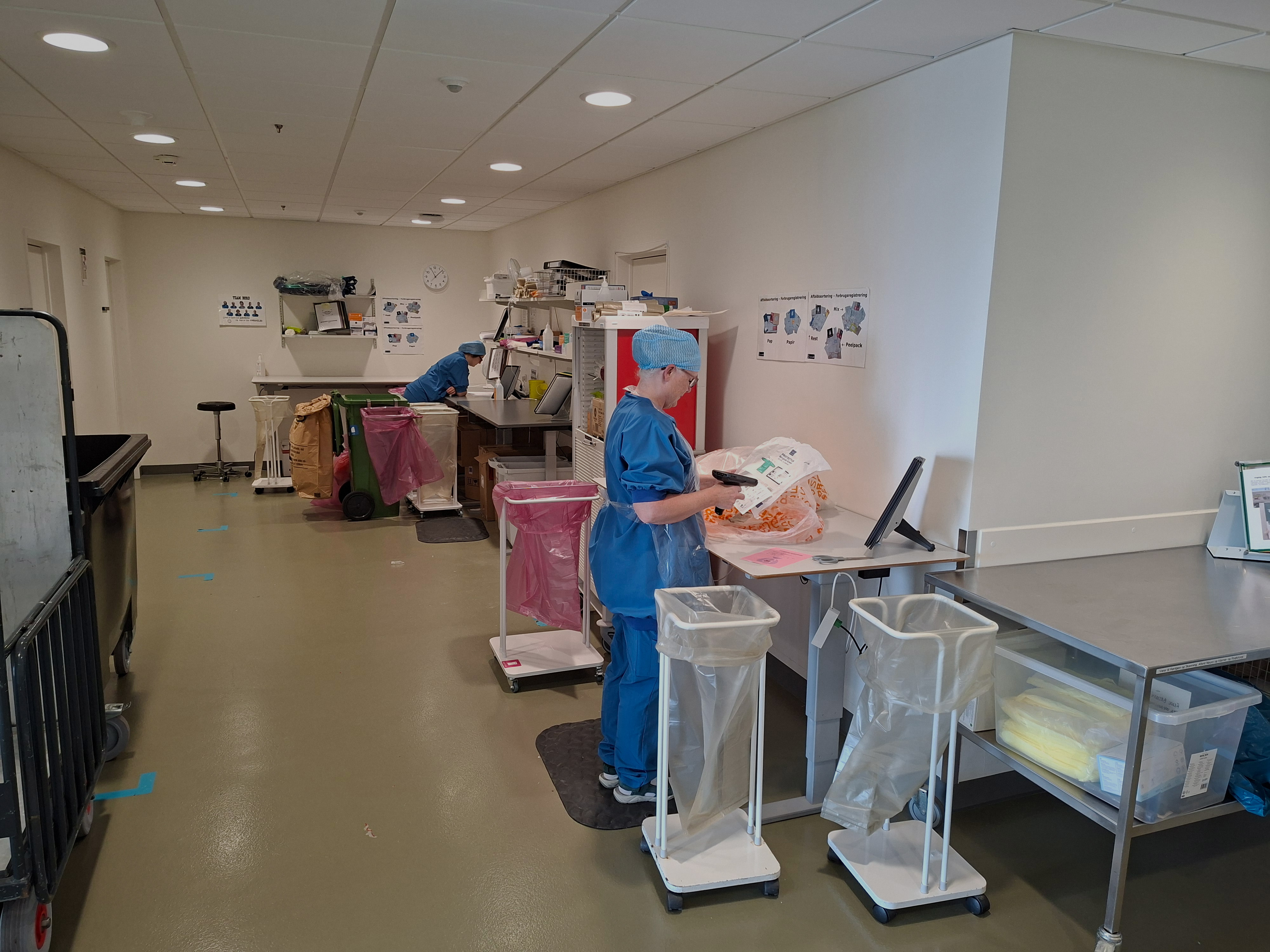
– Our operating rooms didn't support the flow we wanted. And they were spending a lot of money on logistics. Operating rooms have a greater need for expensive, specialized products, so we chose to take a differentiated approach and start there, because they were consuming a lot of nursing and medical resources.
Then the work began to investigate and decide what service level the operating rooms should meet. Whether other professional groups could help. And how we wanted to track the medical equipment.
– After that, we had to decide whether to go with a private supplier or develop it ourselves. We quickly realized that if we used our own system, patient information could be stored in our own databases where it is handled confidentially, so we chose to build our own.
The hospital spent about a year and a half developing the new system in close collaboration between Supply and Service, IT, and practitioners.
– It was a major cross-disciplinary collaboration where we had to figure out how to tackle the task. It has truly been grounded across different professional fields, and I believe that is why it has become such a great success for us, says Claus Ørum.
Before the development of SupplyAID, the hospital faced a massive challenge. We were struggling with it, as Claus Ørum puts it in typical understated fashion.
– Our operating rooms didn't support the flow we wanted. And they were spending a lot of money on logistics. Operating rooms have a greater need for expensive, specialized products, so we chose to take a differentiated approach and start there, because they were consuming a lot of nursing and medical resources.
Then the work began to investigate and decide what service level the operating rooms should meet. Whether other professional groups could help. And how we wanted to track the medical equipment.
– After that, we had to decide whether to go with a private supplier or develop it ourselves. We quickly realized that if we used our own system, patient information could be stored in our own databases where it is handled confidentially, so we chose to build our own.
The hospital spent about a year and a half developing the new system in close collaboration between Supply and Service, IT, and practitioners.
– It was a major cross-disciplinary collaboration where we had to figure out how to tackle the task. It has truly been grounded across different professional fields, and I believe that is why it has become such a great success for us, says Claus Ørum.
Benefits of SupplyAID
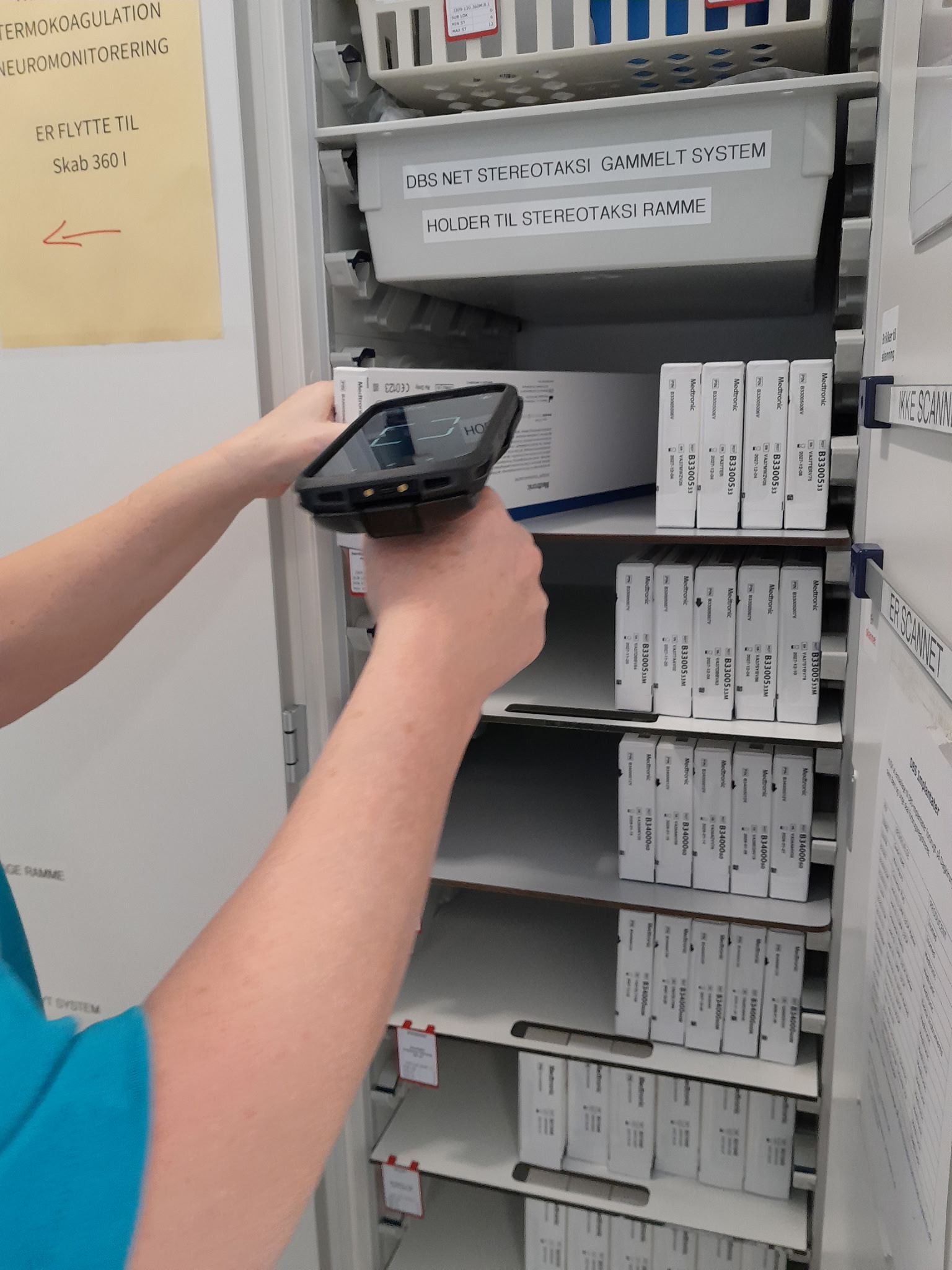
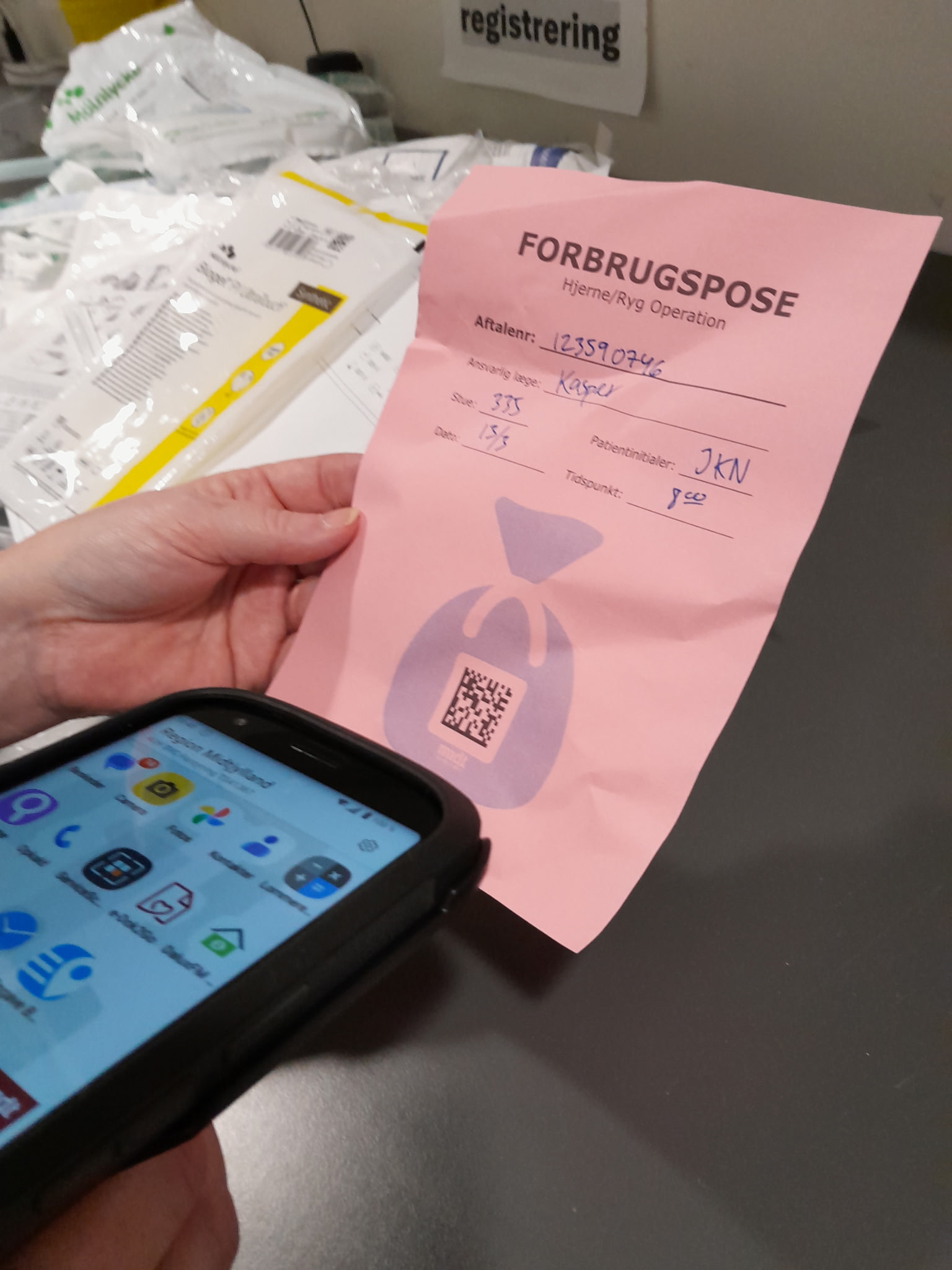
The system consists of three main parts: a product database with updated master data from the region and other public sources, a scanning app on work mobile phones for registering items in stock, during use, and when moving them, as well as the main program on computers, where you can order, move, and track inventory and get a complete overview.
The department uses work smartphones to scan GS1 DataMatrix codes for information on expiration dates, serial numbers, batch numbers, and lot numbers. This is crucial for achieving precise product and expiration management. Even with perhaps 100 products, we can identify every single item and find answers to, for example, exactly where the seventh product is located, right down to the specific location.
With SupplyAID, the hospital can operate more sustainably and reduce waste, as the system provides an overview of consumption and ensures that only what is necessary is purchased.

We have almost eliminated our waste and, in doing so, saved a significant amount of money. In the year and a half we have been up and running, we have saved a double-digit million amount at AUH alone, while also becoming much more sustainable.
The system leaves digital footprints, allowing the hospital to quickly track patients and equipment if a recall becomes necessary.
And then there was what we at AUH call task shifting. We wanted to free up clinical time and delegate tasks to others trained in logistics, and we have succeeded very well with that, says Claus Ørum.
Where logistics used to be a kind of secondary function for nurses, who often relied on sticky notes or perhaps an Excel sheet, we now have a system that supports this. We have a much better overview of delivery times, turnover rates, shrinkage, and complaints. And we now have a more uniform process across departments.
We have almost eliminated our waste and, in doing so, saved a significant amount of money. In the year and a half we have been up and running, we have saved a double-digit million amount at AUH alone, while also becoming much more sustainable.
Looking ahead
Looking ahead, Claus Ørum aims to gradually transition consignment agreements to gain earlier visibility into inventory, while integrating this data into the budget model to track trends and inform future budgets.
– And the third and biggest wish: when we plan a surgery three months out, for example, we currently have to manually ensure the products are ready. We would like our product orders to be automated so the system handles the ordering itself; that would make our lives much easier.
Meanwhile, the rollout of SupplyAID continues across all surgical departments, with a new department added every three months until all 17 are scheduled to be live by autumn 2027.
– After that, we will evaluate whether other departments should be included. Several have already expressed interest, but we have chosen to focus on the surgical departments to ensure we stay aligned and don't spread ourselves too thin.
For Claus Ørum, one point is paramount when discussing the implementation of a system like SupplyAID:
– There are many stakeholders and many users, and for me, it is vital that the work spans across suppliers, doctors, nurses, logistics, and IT. There are so many of us at the table, and the fact that everyone has contributed positively is what has made SupplyAID a success. I want to take my hat off to the interdisciplinary effort; when we all work together, we succeed. And it has been great to be a part of that.
It was a major interdisciplinary collaboration where we had to figure out how to tackle the task. It has truly been grounded in cross-functional expertise, and I believe that is why it has become such a great success for us.